Early Pregnancy Symptoms: What to Expect in the First Weeks

The early weeks of pregnancy are unlike anything else. For some women, it is a time of quiet hope and careful watching. For others, it is physical overwhelm arriving before they have even confirmed anything is happening. Often it is both at once: the excitement of possibility sitting alongside genuine anxiety about what the body is doing, what each symptom means, whether the absence of symptoms is also something to worry about. If you are in that tender, uncertain early window right now, this article is written for you.
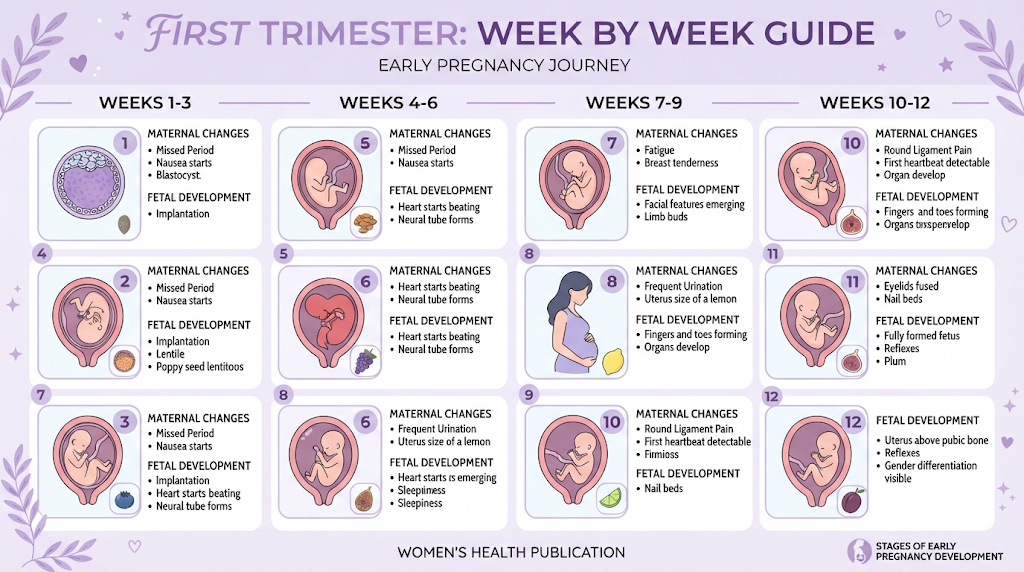
The earliest pregnancy symptoms typically begin between 4 and 6 weeks after the first day of the last menstrual period, though some women notice changes as early as 1 to 2 weeks after conception. The most common early symptoms are fatigue, breast tenderness, nausea, frequent urination, and a missed period. Light spotting called implantation bleeding can occur around weeks 3 to 4. Symptoms peak for most women between weeks 8 and 10 of pregnancy. Some women experience few or no early symptoms, and this is not necessarily a sign that anything is wrong.
The Timeline of First Symptoms
Pregnancy is dated from the first day of the last menstrual period, which means that by the time a missed period occurs, a woman is already considered to be around four weeks pregnant. Conception itself typically happens around Day 14 of a 28-day cycle, roughly two weeks after the last period began.
After fertilisation, the egg travels to the uterus and implants in the uterine lining. This implantation usually occurs around 6 to 10 days after conception. It is from this point that the body begins producing human chorionic gonadotropin (hCG), the hormone detected by pregnancy tests.
Many women do not notice any symptoms until around weeks 5 or 6, after the first missed period. Others begin to feel something earlier. The timeline varies considerably between individuals and between pregnancies in the same person.
Fatigue
Fatigue is one of the earliest and most commonly reported pregnancy symptoms, and it can be profound. The kind of tiredness that arrives in early pregnancy is often described as bone-deep: unlike ordinary tiredness that responds to a good night’s sleep, early pregnancy fatigue can persist regardless of how much rest is taken.
It is driven primarily by rising progesterone, which has a naturally sedating effect, alongside the significant increase in blood volume and metabolic demand the body begins managing almost immediately after conception. The heart begins working harder, energy is being redirected, and the placenta is being built.
This fatigue typically peaks in the first trimester and begins to ease for many women in the second trimester, around weeks 13 to 16.
Nausea
Nausea associated with pregnancy, sometimes called morning sickness though it can occur at any time of day or night, is one of the most recognised early symptoms. It typically begins around weeks 5 to 6 and peaks between weeks 8 and 10. For most women it eases by weeks 12 to 16.
It is thought to be linked to rapidly rising hCG levels and increased oestrogen. The severity varies enormously. Some women feel mild background nausea that does not significantly interfere with daily life. Others vomit regularly. A small number experience hyperemesis gravidarum, a severe form of pregnancy nausea and vomiting that requires medical support.
Triggers vary between individuals. Common ones include strong smells, certain foods, hunger, and fatigue. Eating small amounts frequently, staying hydrated, and avoiding strong smells where possible can help manage mild to moderate nausea. Any nausea and vomiting severe enough to prevent eating or drinking, cause significant weight loss, or lead to signs of dehydration should be assessed by a healthcare provider promptly.
Breast Changes
Breast tenderness, swelling, and sensitivity are among the earliest physical signs of pregnancy for many women and can begin as early as one to two weeks after conception. The breasts may feel heavier, fuller, or sore to the touch. The areolae (the area around the nipples) may darken and widen. Small bumps on the areolae, called Montgomery’s tubercles, may become more visible.
These changes are driven by rising oestrogen and progesterone preparing the breast tissue for eventual milk production. Tenderness often eases somewhat as the body adjusts to its new hormonal environment, usually by the end of the first trimester.
Implantation Bleeding
Some women experience light spotting around the time of implantation, typically 6 to 12 days after conception. This is called implantation bleeding. It is usually very light, lasting only a day or two, and appears as pink or light brown spotting rather than a full flow.
Not all women experience implantation bleeding, and its absence does not mean implantation has not occurred. Because the timing overlaps with when a period might be expected in some cycles, it can occasionally be mistaken for a very light period.
Any heavier bleeding, bleeding accompanied by pain, or bleeding after a positive pregnancy test has been confirmed should be assessed by a healthcare provider.
Other Early Symptoms
Additional early pregnancy symptoms that many women notice include frequent urination (as blood flow to the kidneys increases and hCG affects the bladder), heightened sense of smell, food aversions or cravings, a metallic taste in the mouth, mild bloating, and increased vaginal discharge. Light headaches and occasional dizziness related to blood pressure and blood sugar changes can also occur.
Not every symptom appears in every pregnancy, and no symptom is required to confirm that a pregnancy is progressing well.
No Symptoms: Is It Normal?
Some women, particularly in the very early weeks, have minimal or no noticeable symptoms. This is common and does not indicate that something is wrong. Symptom intensity and type vary significantly between individuals and between pregnancies. A woman who had pronounced nausea in one pregnancy may have almost none in another.
A sudden disappearance of symptoms that were previously present is worth discussing with a healthcare provider, as is persistent bleeding or significant one-sided pain. But the absence of symptoms in a woman who has had few to begin with is not on its own a cause for alarm.
When to Take a Test
Home pregnancy tests detect hCG in urine and are most accurate from the first day of a missed period. Some tests marketed as early-response tests can detect lower hCG levels and may give an accurate result a few days before a missed period, though the reliability increases as the pregnancy progresses and hCG levels rise.
Testing first thing in the morning gives the most accurate result, as urine is more concentrated after sleep. A positive result, even a faint line, is a positive result: faint lines indicate hCG is present. A negative result with ongoing symptoms and no period is worth retesting in two to three days.
First Steps After a Positive Test
A positive pregnancy test is the beginning of a new set of decisions and steps. In most countries, the next step is to contact a midwife, obstetrician, or primary care doctor to register the pregnancy and arrange early antenatal care. The timing of the first appointment varies by country and healthcare system, but it typically occurs between weeks 8 and 12.
Starting a folic acid supplement (400 micrograms daily) as early as possible is recommended in most guidelines to support neural tube development, ideally from before conception through to at least 12 weeks. If a pregnancy is discovered after this window, it is still worth starting and discussing with a healthcare provider.
Reducing alcohol, caffeine, and any medications not confirmed as safe in pregnancy are early steps to discuss with a healthcare provider. This is also a time to review any existing medications with your doctor before stopping or changing anything.
FAQ
How early can pregnancy symptoms start?
Some women notice subtle changes within one to two weeks of conception, before a period is even missed. These earliest signs, such as breast tenderness, mild fatigue, or a slight change in how they feel, often go unnoticed or are attributed to PMS. Most women begin to notice clearer symptoms around weeks 5 to 6, after the first missed period and as hCG levels rise. The timing varies between individuals and between pregnancies.
Is it possible to have no symptoms in early pregnancy?
Yes. Some women have very few or no noticeable symptoms in the first trimester, and this does not mean the pregnancy is not progressing. Symptom intensity is not a reliable indicator of pregnancy health. Routine early antenatal appointments and an ultrasound scan, typically offered between weeks 8 and 14 depending on the healthcare system, provide much more reliable information about how the pregnancy is developing than symptom presence or absence.
What is the difference between implantation bleeding and a period?
Implantation bleeding is typically much lighter than a period, appearing as pink or light brown spotting rather than a full flow of red blood. It lasts one to two days rather than the several days of a typical period. It does not progress from light to heavy as a period often does. If spotting is accompanied by cramping and progresses in volume, or if a pregnancy test is positive and bleeding continues, a healthcare provider should be contacted.
When should I contact a doctor after a positive pregnancy test?
Contact a healthcare provider promptly to register the pregnancy and begin antenatal care. Seek urgent assessment if you experience heavy bleeding, significant abdominal pain (particularly one-sided), shoulder tip pain, or dizziness with pain, as these can be signs of an ectopic pregnancy, which requires immediate medical attention. An ectopic pregnancy is one that implants outside the uterus, most commonly in a fallopian tube, and is a medical emergency.
The Early Weeks Are a Lot to Navigate. Mayno Is Here to Help You Through Them.
Whether you are waiting to take a test, adjusting to a positive result, or trying to make sense of what your body is doing, you do not have to piece it together alone. Mayno is here with clear, compassionate information for every stage of your health journey.
Visit mayno.health for women’s health guidance you can trust.
This article is for informational purposes only and does not constitute medical advice. If you are pregnant or think you may be pregnant, please consult a qualified healthcare professional. Mayno Health does not replace clinical care.
Disclaimer: This article is for informational purposes only and does not constitute medical advice. Always consult a qualified healthcare professional.