Ovarian Reserve: What It Is and What AMH Means
Receiving an AMH result without a proper explanation is one of the most anxiety-inducing experiences in reproductive health. A number on a page, sometimes accompanied by the words “low” or “diminished,” and often without the context that would make it meaningful. Women leave these conversations convinced they are running out of time, that their options are closing, that their body has failed them in some fundamental way. Most of the time, that conclusion is not what the result actually supports. AMH is a useful clinical measurement, but it is widely misunderstood, and the gap between what it measures and what it is taken to mean causes enormous and often unnecessary distress. Here is what it actually tells you, and what it does not.
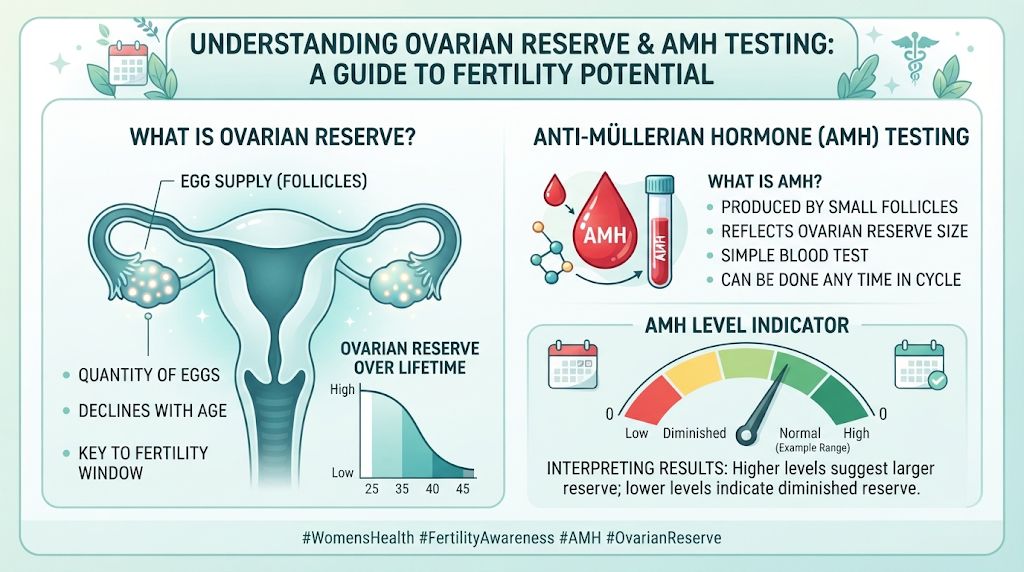
AMH, or anti-Mullerian hormone, is a blood test that reflects the size of your remaining pool of egg-containing follicles. It measures quantity, not quality. A low AMH means a smaller remaining follicle pool, which may affect how you respond to IVF stimulation, but it does not reliably predict your ability to conceive naturally, and it does not measure egg quality or the likelihood of a healthy pregnancy. A low result warrants a clinical conversation and possibly earlier action on conception plans, but it is not a diagnosis of infertility.
What AMH Actually Measures
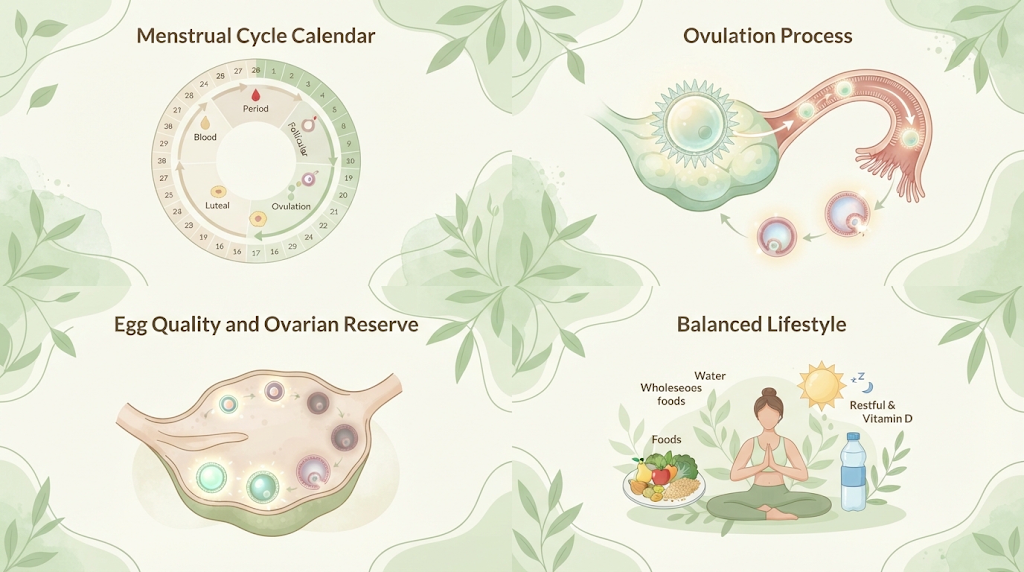
AMH is produced by the granulosa cells of small antral follicles in the ovaries. Because these follicles are continuously present regardless of where a woman is in her menstrual cycle, AMH levels are relatively stable across the month and can be tested on any day, which makes it practically convenient as a clinical marker.
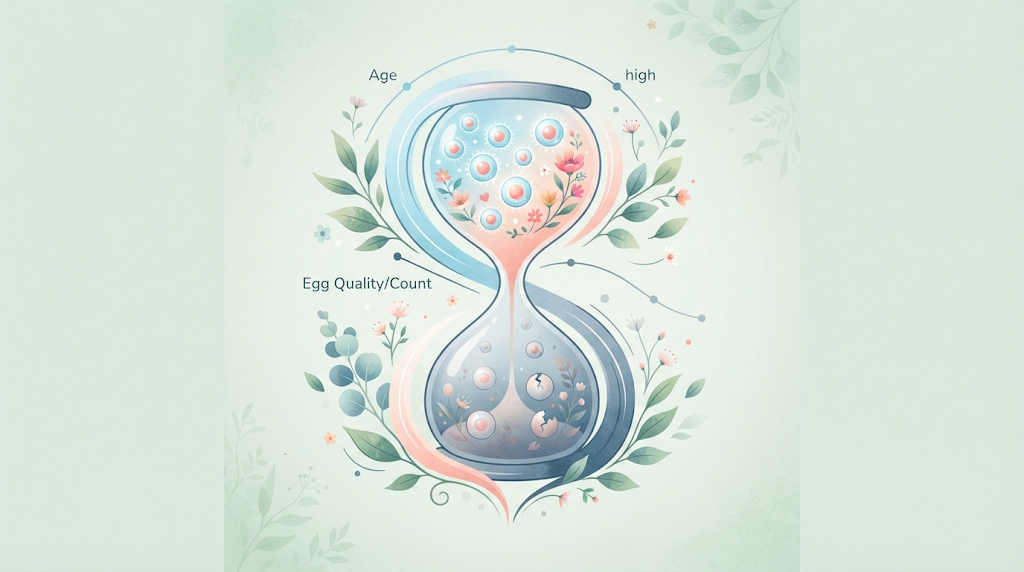
The level of AMH in the blood broadly reflects how many of these small follicles are present, which in turn reflects the overall remaining pool of eggs. This is what “ovarian reserve” means: the size of the remaining supply.
As women age, follicle numbers decline through natural attrition, and AMH levels fall accordingly. AMH is therefore a useful indirect marker of age-related ovarian ageing and is the most widely used clinical test for ovarian reserve in fertility medicine.
It is also used alongside the antral follicle count (AFC), an ultrasound assessment that directly counts the visible small follicles in both ovaries at the start of a cycle. AMH and AFC broadly agree and together give the most complete picture of ovarian reserve available.
What AMH Does Not Measure
This is the part that is most often not communicated clearly.
AMH does not measure egg quality. The chromosomal integrity of the eggs remaining in the follicle pool, which is the factor most strongly associated with the chance of a successful pregnancy, particularly in older women, is not reflected in AMH levels at all.
AMH does not predict the ability to conceive naturally in any given cycle. Large studies including the PRISM study and subsequent analyses have consistently shown that AMH levels do not predict time to natural conception in women who have not been diagnosed with infertility. A woman with a low AMH who is ovulating can and does conceive spontaneously.
AMH does not measure uterine health, tubal patency, sperm quality, or any of the other factors that contribute to fertility outcomes. A single AMH number captures one dimension of one aspect of reproductive capacity, and reading it in isolation produces an incomplete and frequently distorted picture.
Reference Ranges and Their Limitations
AMH results are reported in different units depending on the laboratory and country: either pmol/L or ng/mL. These are not interchangeable, and comparing results across different unit systems without conversion causes confusion. Typical reference ranges quoted by laboratories vary, and what is considered “normal,” “low,” or “very low” differs between clinical guidelines and laboratory reference populations.
As a general orientation, AMH levels above approximately 15 pmol/L (2.2 ng/mL) are typically considered within the normal reproductive range. Levels between 5 and 15 pmol/L (0.7 to 2.2 ng/mL) are often described as low normal to low. Below 5 pmol/L (0.7 ng/mL) is generally considered low, and below 2 pmol/L (0.3 ng/mL) is sometimes described as very low.
However, these reference ranges were derived primarily from populations of women attending fertility clinics, which are not representative of all women. The clinical significance of a given AMH level is highly context-dependent. A result that predicts a limited response to IVF stimulation in a 40-year-old is an entirely different clinical picture from the same result in a 28-year-old who is not yet trying to conceive.
AMH also varies with hormonal contraceptive use (combined oral contraceptives lower AMH levels by approximately 20 to 30 percent), with vitamin D status, and with body weight. A result taken while on the pill should be interpreted with this suppression effect in mind, and ideally repeated after stopping contraception if the result is low and treatment decisions are being considered.
Low AMH Does Not Mean Infertility
This deserves its own section because it is where the most significant and harmful misunderstanding lies.
A low AMH means the remaining follicle pool is smaller than average for age. It does not mean that no eggs remain. It does not mean the remaining eggs are poor quality. It does not mean ovulation has stopped or is about to stop. And it does not mean natural conception is impossible.
Women with low AMH conceive naturally, carry pregnancies to term, and have healthy children. The evidence that AMH predicts natural conception outcomes in women without infertility diagnoses is consistently weak. The test is most clinically relevant in the context of planning assisted reproduction, where a low AMH predicts a weaker response to ovarian stimulation during IVF and may prompt a higher medication dose or a discussion about the number of eggs likely to be retrieved.
For a woman who is trying to conceive naturally and receives a low AMH, the appropriate response is a conversation with a reproductive specialist to understand what the result means in her specific context, not a conclusion that pregnancy is unlikely or impossible.
What to Do With a Low AMH Result
If you have received a low AMH result, the following steps are worth considering.
Get context. A single number without a clinical conversation is incomplete. A reproductive endocrinologist or fertility specialist is better placed than most general practitioners to interpret AMH in the context of your age, cycle regularity, AFC, and reproductive history.
Consider the timing. If you are planning to conceive in the next one to two years, a low AMH may support an earlier start rather than continuing to wait. It does not mean you must act immediately, but it is a legitimate factor to weigh in timing decisions.
Consider egg freezing if relevant. For women who are not yet ready to conceive, a low AMH in their late twenties or early thirties may be a clinically relevant reason to consider egg freezing sooner rather than later, as the follicle pool will continue to decline. A fertility specialist can help assess whether the current AMH and AFC suggest this would be a worthwhile intervention.
Do not act from panic. A low AMH result is a data point, not a diagnosis and not a verdict. The appropriate next step is informed clinical conversation, not rushed decisions made under emotional pressure.
FAQ
Can AMH levels improve over time?
AMH reflects the natural decline of the follicle pool, and this process is not reversible. Some studies have explored whether vitamin D supplementation, DHEA, or other interventions might support ovarian reserve, but the evidence is limited and no intervention is currently supported by robust clinical data as a way to meaningfully increase AMH. A result that appears to rise slightly between tests may reflect natural variation or the effect of stopping hormonal contraception rather than a genuine biological improvement.
Does a normal AMH guarantee I can get pregnant?
No. A normal AMH means the ovarian reserve is adequate, but it does not account for egg quality, ovulation regularity, tubal health, uterine factors, or sperm quality. All of these independently affect fertility outcomes. A normal AMH in the context of untreated endometriosis, blocked tubes, or significant male factor infertility does not protect against those challenges. AMH is one piece of a fertility picture that requires several other pieces to be complete.
Should I get my AMH tested if I am not trying to conceive?
AMH testing outside the fertility clinic context is increasingly common, including through at-home testing kits, but its clinical utility for women who are not planning conception in the near future is debated. A low result in a 30-year-old who is not planning pregnancy for several years may generate anxiety without changing anything actionable in the short term. If you are considering testing, doing so alongside a conversation with a clinician who can interpret the result in context is more valuable than a number alone.
How is AMH used differently in IVF versus natural conception planning?
In IVF, AMH is primarily used to predict how many eggs are likely to be retrieved in response to ovarian stimulation. A low AMH predicts a lower yield, which may affect the stimulation protocol chosen and the realistic expectations for egg numbers. In natural conception, AMH has much less predictive value. The studies that would establish it as a predictor of natural conception outcomes in unselected populations consistently show weak or no association. This distinction is important and is often not explained to women receiving results.
A Number Is Not Your Story. Mayno Is Here to Help You Read It.
An AMH result is a piece of information, not a forecast and not a sentence. Understanding what it means in your specific context, at your age and stage, with the rest of your health picture in view, is what allows you to make genuinely informed decisions. Mayno is here to give you that understanding.
Visit mayno.health for women’s health guidance that goes beyond the headline number.
This article is for informational purposes only and does not constitute medical advice. If you have received fertility test results and want to understand their implications, please consult a qualified healthcare professional or reproductive specialist. Mayno Health does not replace clinical care.
Disclaimer: This article is for informational purposes only and does not constitute medical advice. Always consult a qualified healthcare professional.