What Is Normal Breast Tissue? Understanding What You Are Feeling

Reaching up in the shower and feeling something unfamiliar in your breast is one of the most unsettling moments a woman can experience. Your mind races. You press again, wondering if it was always there, wondering if you missed something, wondering what it means. The truth is that most women have never been taught what their breasts are supposed to feel like, which makes it almost impossible to know what is unusual. You are not alone in that confusion, and you are not wrong to take it seriously. This article is here to help you understand your breast tissue, so that the next time you check, you are doing it from knowledge rather than fear.
Direct answer: Most breast tissue is naturally uneven in texture. Lumpy, ridged, or ropey areas are common and are often completely normal, particularly in younger women and in the days before a period. Normal does not mean identical for everyone. However, a lump that is new, hard, painless, or feels different from the surrounding tissue on both sides deserves medical assessment. When in doubt, get it checked.
The Full Range of Normal
There is no single way that healthy breast tissue feels, and that variation is the first thing to understand.
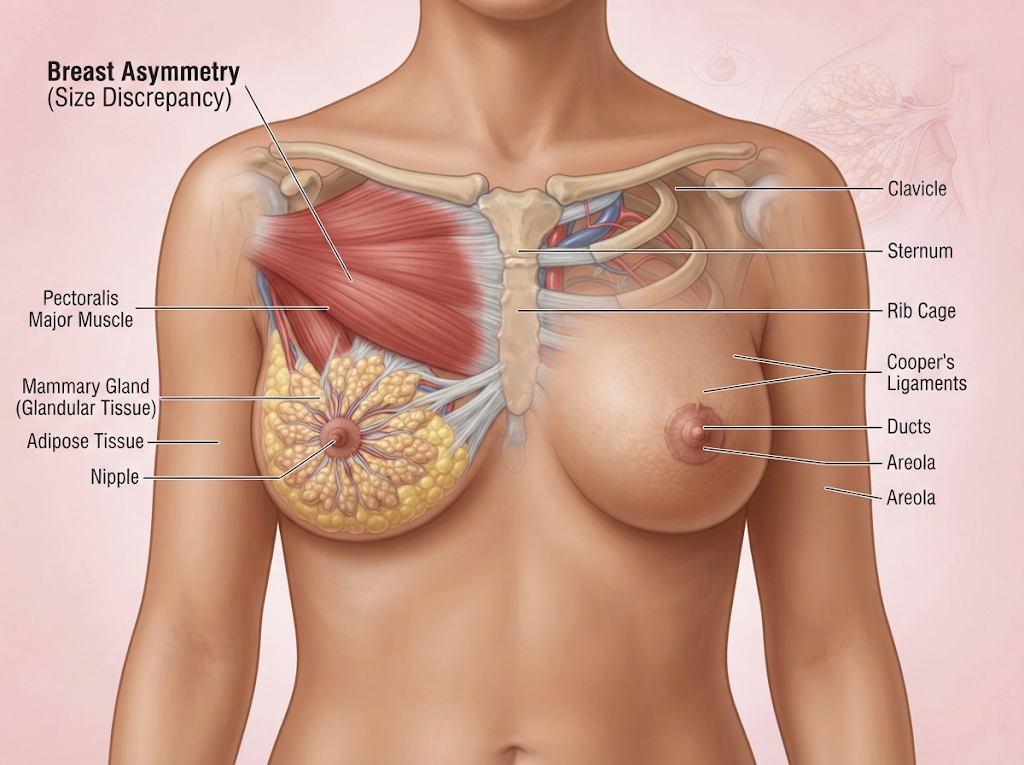
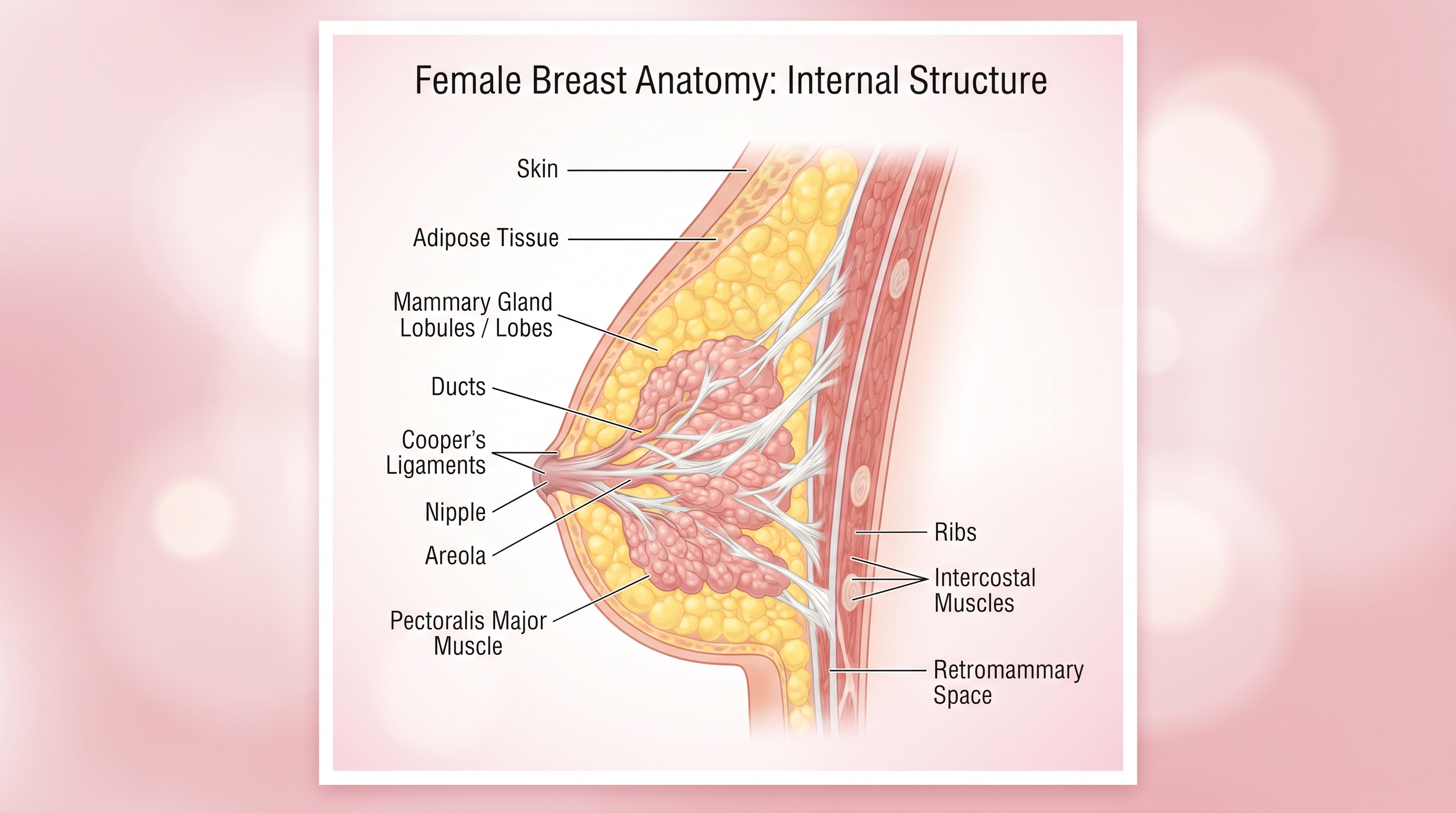
Breasts are made up of several types of tissue: glandular tissue (which produces milk), fibrous connective tissue (which gives structure), and fatty tissue (which fills the space between). The ratio of these tissues varies from woman to woman and changes across a lifetime. A young woman in her twenties often has breasts that feel firmer and more textured. A woman in her fifties, particularly after menopause, typically has breasts that feel softer as glandular tissue is gradually replaced by fat.
Some women describe their breasts as feeling smooth and even. Others describe them as bumpy, granular, or nodular, with a texture that has been compared to a bag of frozen peas or a cobblestone surface. Both are within the normal range.
The lower outer quadrant of the breast, which stretches toward the armpit, often has the most glandular tissue and can feel particularly dense or irregular. The area just beneath the nipple can feel firm or disc-like. The upper breast sometimes has a pronounced ridge of tissue that runs along the edge of the chest muscle. All of these are typical findings in healthy breasts.
How Your Menstrual Cycle Changes What You Feel
Breast tissue does not stay the same throughout the month. Hormones actively change its character, which is why examining your breasts at the same point in your cycle each month gives you a much more reliable comparison.
In the days leading up to a period, rising progesterone causes the glandular tissue to expand and the ducts to widen slightly. This makes breasts feel fuller, heavier, and often more tender. Areas that feel smooth mid-cycle can become noticeably bumpier in the luteal phase. This is normal.
After a period begins and progesterone drops, the swelling resolves and the breasts typically return to their baseline texture. This is why most clinicians recommend checking your breasts in the week following your period, when hormonal influence is at its lowest and your baseline is clearest.
For women who are not menstruating, whether due to menopause, hormonal contraception that stops periods, or another reason, picking any consistent date in the month and sticking to it serves the same purpose.
What Is Fibrocystic Tissue?
If a doctor has ever described your breasts as fibrocystic, you may have felt more confused than reassured. The term simply refers to a pattern of breast tissue that is characterised by a mix of fibrous tissue and small cysts, producing a lumpy, sometimes tender texture that fluctuates with the menstrual cycle.
Fibrocystic changes are extremely common. Research estimates that between 50 and 60 percent of women have some degree of fibrocystic breast tissue during their reproductive years. It is not a disease. It is not a precursor to cancer. It is a description of how certain breast tissue responds to hormonal changes.
Women with fibrocystic tissue often notice that their breasts are more symptomatic before a period and settle down afterward. The cysts involved are usually small, fluid-filled, and mobile when pressed, which is a different feel from a solid lump.
Caffeine reduction helps some women with fibrocystic symptoms, though the evidence is modest. Evening primrose oil is widely used, though again with limited clinical evidence. If the discomfort is significant, a conversation with your doctor about options including hormonal management is worthwhile.
When a Finding Warrants Medical Attention
Knowing what is normal for you is the foundation of being able to notice when something changes. These are the signs that should prompt you to contact a healthcare provider, not out of panic, but out of the same sensible approach you would take to any change in your body.
See a doctor if you notice:
A new lump or thickening that does not change with your menstrual cycle
A lump that feels hard, fixed, or different from the surrounding tissue and from the same area on the other side
A change in the shape or size of one breast that is not related to weight gain or your cycle
Skin changes, including dimpling, puckering, redness, or a texture that resembles orange peel
A nipple that has recently inverted or changed shape
Nipple discharge that is spontaneous (not only when squeezed), bloody, or from one side only
Persistent pain in one specific area, particularly if it is new
The majority of these findings, when investigated, turn out to be benign. Cysts, fibroadenomas (firm, smooth, mobile lumps that are extremely common in women under 40), and areas of focal fibrocystic change make up the vast majority of breast referrals. But the investigation is always worth pursuing.
Treatment options and referral pathways vary by country, but in most healthcare systems a referral to a breast clinic will involve an assessment that may include clinical examination, ultrasound, mammography, or a combination. Age, family history, and the nature of the finding all inform which investigations are appropriate.
FAQ
What does a normal breast lump feel like compared to a cancerous one?
Normal findings like cysts and fibroadenomas tend to feel smooth, round, and mobile, meaning they shift slightly under your fingers when pressed. Areas of fibrocystic tissue feel more like generalised bumpiness rather than a distinct lump. A finding that raises more concern is typically hard, irregular in shape, fixed in place, and does not change with the menstrual cycle. However, appearance alone cannot diagnose anything, which is why any new or uncertain lump warrants a clinical assessment.
How do I check my breasts correctly?
Use the flat pads of your three middle fingers rather than your fingertips. Apply light, medium, and firm pressure as you move in small circles, covering the full breast from armpit to breastbone and from collarbone to below the breast. Standing upright in the shower or lying flat with one arm raised are both effective positions. The goal is familiarity with your own normal, so that changes become noticeable.
Is breast pain usually a sign of cancer?
Breast pain, particularly cyclical pain linked to the menstrual cycle, is one of the least likely symptoms of breast cancer. The majority of breast pain is hormonally driven, linked to fibrocystic changes, or caused by musculoskeletal issues in the chest wall. Non-cyclical pain that is persistent, localised to one spot, and new is more worth investigating, not because it is likely to be cancer, but because any unexplained change deserves attention.
Does dense breast tissue increase cancer risk?
Dense breast tissue is a genuine risk factor for breast cancer, and it also makes tumours harder to detect on a mammogram because both appear white on the image. Density is assessed radiologically rather than by how a breast feels. Women informed that they have dense breasts on mammography may benefit from a conversation with their doctor about supplemental screening options, which vary by country and local guidelines.
You Know Your Body. Mayno Helps You Understand It.
The most powerful thing you can do for your breast health is to get to know your own tissue well enough that change becomes visible. Mayno is here to support you with evidence-based information, compassionate guidance, and tools that help you track what matters across every stage of your health journey.
Explore Mayno today at mayno.health.
Disclaimer: This article is for informational purposes only and does not constitute medical advice. Always consult a qualified healthcare professional.