Fertility and Age: What the Research Actually Says
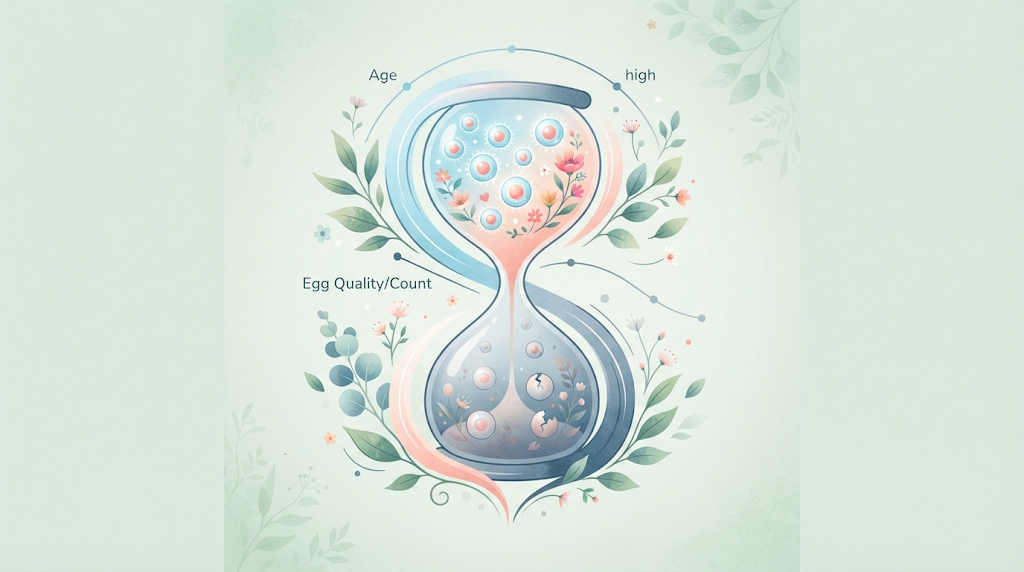
Somewhere along the way, many women absorbed a version of their fertility timeline that is driven more by alarm than evidence. The message, repeated in magazine articles, casual conversations, and sometimes in consulting rooms, is that fertility falls off a cliff at 35, that time is running out, that decisions must be made urgently. For some women this creates real anxiety that shapes major life choices. For others it creates a kind of paralysis. What is rarely offered alongside the warnings is the actual data, presented in a way that allows women to think clearly rather than react from fear. You deserve the honest picture, and that means both the genuine limitations that age creates and the significant space for nuance that the catastrophising leaves out.
Fertility does decline with age, and that decline is real and clinically important. However, the idea of a sudden cliff at 35 is a significant oversimplification. The decline is gradual from the mid-twenties, becomes more pronounced from the mid-thirties, and steepens after 37 to 38. Most women in their mid-thirties who are trying to conceive do so within a year. The relevant factors are egg quality and chromosomal integrity, which decline with age, alongside individual variation that is substantial. Age matters, but it is one factor among several, and it does not determine individual outcomes.
The Actual Data by Decade
The statistics on fertility by age come primarily from population-level studies, and it is worth understanding what they show and what they cannot tell you.
In the early twenties, monthly fecundity (the probability of conceiving in a given cycle with regular unprotected intercourse) is approximately 20 to 25 percent. This is the biological peak, and it is worth noting that even at peak fertility, conception in any single cycle is far from guaranteed.
In the late twenties, these figures remain broadly similar. The decline through the twenties is modest and for most women has no practical impact on their ability to conceive.
In the early thirties, monthly conception rates begin to decline gradually. Studies suggest a fecundity rate of approximately 15 to 20 percent per cycle at this stage. For the majority of women trying to conceive in their early thirties, this translates to conception within 12 months.
By the mid-to-late thirties, the decline becomes more meaningful. Monthly fecundity is estimated at around 10 to 15 percent per cycle at 35, falling further through the late thirties. The time it takes to conceive increases, and the risk of miscarriage rises, driven primarily by a higher rate of chromosomal abnormalities in older eggs.
In the early forties, monthly conception rates are lower still, and the miscarriage rate after a positive pregnancy test increases significantly. Natural conception absolutely continues to occur, but the likelihood per cycle is reduced and the path to a live birth is statistically less straightforward.
What the “35 Cliff” Actually Represents
The age of 35 appears in clinical guidelines not because fertility falls off a cliff at that birthday, but because it represents the threshold at which certain investigations and interventions are recommended sooner. Women under 35 who have been trying to conceive for 12 months without success are typically referred for fertility investigation. Women over 35 are referred after six months, because time is a more relevant factor in this age group and earlier investigation is clinically appropriate.
The figure also appears in prenatal screening guidelines. The risk of chromosomal conditions including Down syndrome rises with maternal age, which is why certain screening tests are offered more routinely from 35 onward in many healthcare systems.
None of this means that fertility stops, or falls sharply, at 35. What it means is that 35 is a reasonable clinical reference point for shifting the threshold for investigation and monitoring, not a biological expiry date.
The studies most frequently cited to support the alarming version of this story were conducted partly on historical French birth records from the 17th and 18th centuries, when populations had no access to contraception and lived under very different health conditions. More recent data from contemporary women using modern reproductive tracking methods presents a somewhat more reassuring picture, particularly for women in their early-to-mid thirties.
Egg Quality vs Egg Quantity
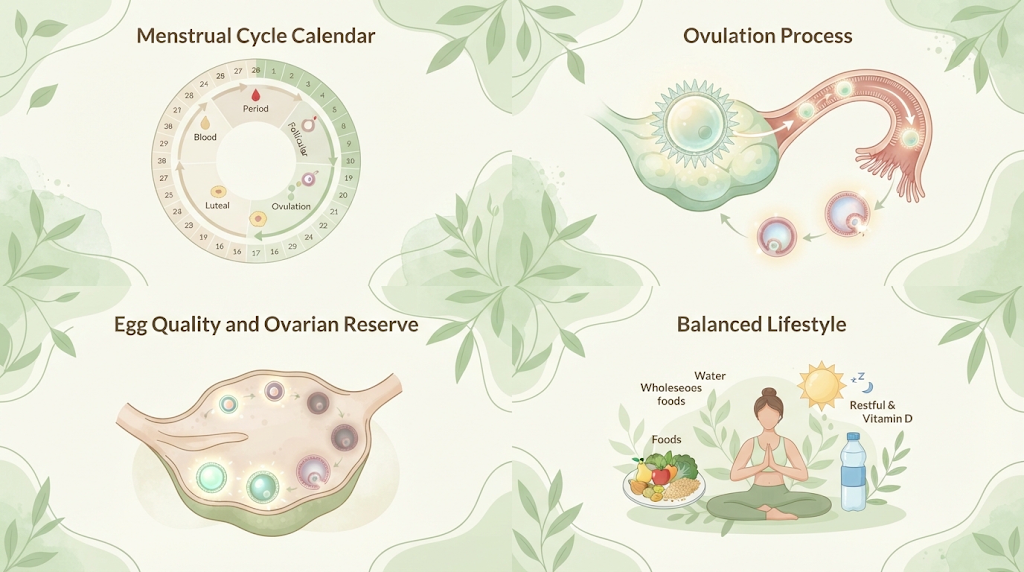
Understanding why age affects fertility requires separating two distinct concepts: egg quantity and egg quality.
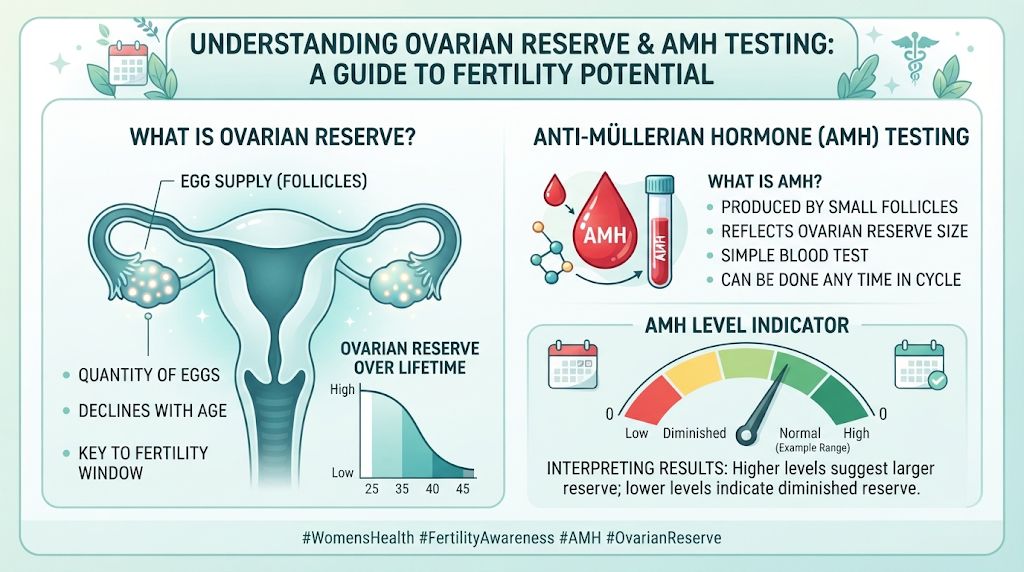
Egg quantity, reflected in ovarian reserve measures such as AMH and antral follicle count, declines continuously from birth. But quantity alone does not determine fertility outcomes in natural conception. A woman can have a very low ovarian reserve and still conceive naturally if the eggs she has are of good quality and ovulation is occurring.
Egg quality refers to the chromosomal integrity of the egg. As eggs age, they are more prone to errors during meiosis, the cell division process that produces a mature egg ready for fertilisation. These chromosomal errors, called aneuploidies, increase in frequency with age and are the primary reason for the rise in miscarriage rates and the fall in successful pregnancy rates as women get older.
This distinction matters because it explains why IVF with a woman’s own eggs becomes less successful with age (fewer chromosomally normal eggs available), while IVF using donor eggs from a younger woman maintains much higher success rates regardless of the recipient’s age. The uterine environment remains capable of supporting pregnancy well into the forties; it is primarily the egg that changes.
IVF Success Rates by Age
IVF success rates illustrate the age-quality relationship clearly, because they are tracked systematically and published by national regulators in many countries.
Using a woman’s own eggs, live birth rates per IVF cycle are approximately 30 to 40 percent for women under 35, falling to around 20 to 25 percent at 38 to 39, 10 to 15 percent at 40 to 42, and below 5 percent above 43 in most datasets.
Using donor eggs from a younger woman, live birth rates per cycle remain broadly consistent across recipient ages, typically in the 40 to 50 percent range, demonstrating that the uterus itself is not the primary limiting factor.
These figures represent averages across populations undergoing IVF, who are not a representative sample of all women trying to conceive. Many people who seek IVF have specific fertility diagnoses, which means these rates should not be read as a direct prediction of natural conception outcomes in healthy women of the same age.
Age Is Not the Only Factor
It is essential, alongside the accurate age-related data, to emphasise that age is one variable in a complex picture.
Conditions including PCOS, endometriosis, previous pelvic infection, uterine abnormalities, and thyroid dysfunction all significantly affect fertility and can do so at any age. Male factor infertility accounts for around half of all fertility difficulties and is entirely unrelated to female age. Lifestyle factors including smoking, which accelerates ovarian ageing, significant obesity, and very low body weight all affect fertility independently of age.
This means that a 38-year-old woman without underlying conditions, with a healthy lifestyle and a partner whose sperm parameters are normal, is in a very different position from a 28-year-old woman with untreated endometriosis and significant male factor infertility. Age matters and should be weighed honestly. But it does not override everything else, and it does not define individual outcomes.
FAQ
Should I freeze my eggs if I am not ready to have children in my thirties?
Egg freezing offers a meaningful option for women who want to preserve future fertility, though it is not a guarantee. Success depends significantly on the age at which eggs are frozen, with better outcomes when eggs are retrieved before 36. It is worth having an honest conversation with a reproductive specialist about your individual ovarian reserve, the realistic success rates for your age, and the costs involved, before making a decision based on either reassurance or anxiety alone.
Does age affect miscarriage risk?
Yes, meaningfully. The rate of miscarriage rises with age, primarily because of the increasing proportion of chromosomally abnormal eggs. At 25, the miscarriage rate after a confirmed pregnancy is approximately 10 percent. By 40, it rises to around 40 percent, and above 45 the majority of pregnancies end in miscarriage. This is one of the most significant clinical consequences of delayed conception and is worth including in any honest conversation about age and fertility.
Is the biological clock the same for everyone?
No. Ovarian reserve and the rate of age-related fertility decline vary considerably between individuals and appear to have a genetic component. Some women have significantly reduced ovarian reserve in their twenties, while others have strong reserve into their early forties. This variability is one reason why individual assessment through AMH testing and antral follicle count can provide more personally relevant information than population averages alone.
At what age does it become very difficult to conceive naturally?
There is no single threshold, but statistical difficulty increases meaningfully after 38 and becomes more substantial above 42. Women in their early forties do conceive naturally, and there are pregnancies in the mid-forties without assisted reproduction, but per-cycle probabilities are lower and time to conception is longer. For women in their early forties who are actively trying to conceive, prompt medical investigation and a referral to a reproductive specialist is a reasonable and sensible step rather than a last resort.
You Deserve Facts, Not Fear. Mayno Is Here to Provide Them.
Making decisions about your reproductive life is too important to do from a place of anxiety and incomplete information. Mayno gives you the real data, the honest nuance, and the compassionate support to think clearly about what is right for you.
Visit mayno.health to explore women’s health guidance rooted in evidence, not alarm.
This article is for informational purposes only and does not constitute medical advice. If you have concerns about your fertility, please consult a qualified healthcare professional. Mayno Health does not replace clinical care.
Disclaimer: This article is for informational purposes only and does not constitute medical advice. Always consult a qualified healthcare professional.