How Hormones Affect Your Skin Throughout Life
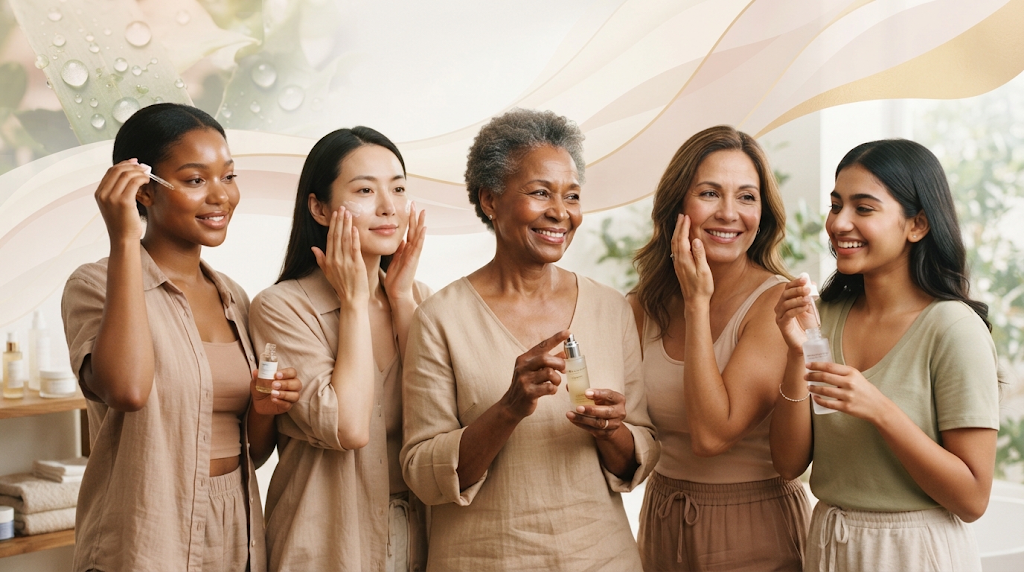
Your skin in your twenties looked different from your skin at fifteen, and your skin now looks different again. Maybe you sailed through adolescence only to develop acne in your thirties. Maybe pregnancy gave you a glow that vanished overnight after your baby arrived. Maybe perimenopause has brought dryness, thinning, or breakouts you did not expect at this stage of life. If you have ever felt confused by your own skin, that confusion makes complete sense. Nobody gives women a clear account of how profoundly hormones shape skin at every stage, and without that map, the changes can feel random and demoralising. They are not random. Here is what is actually happening.
Hormones, particularly oestrogen, progesterone, and androgens, directly regulate skin thickness, oil production, collagen levels, hydration, and healing. These hormones shift across the menstrual cycle, through puberty, pregnancy, and the postpartum period, and again through perimenopause and beyond. Each transition can visibly change how skin looks and behaves. Understanding which hormone is driving which change allows you to respond with more targeted care rather than guessing.
The Three Hormones That Run the Show
Oestrogen is the skin’s great protector. It stimulates collagen production, which keeps skin firm and thick. It supports the skin barrier, helps retain moisture, and promotes wound healing. Higher oestrogen levels are associated with smoother, more hydrated skin. When oestrogen falls, as it does in the late luteal phase before a period and dramatically during menopause, skin feels the difference.
Progesterone has a more complicated relationship with skin. It increases sebum production in the luteal phase, which is why many women experience oilier skin and premenstrual breakouts in the week before their period. It also causes mild fluid retention, which can make skin appear slightly puffier. In pregnancy, when progesterone levels are very high, these effects are amplified significantly.
Androgens, including testosterone, drive sebaceous gland activity. Even though androgens are often thought of as male hormones, women produce them too, and they are the primary driver of acne at any age. When androgen levels are relatively high compared to oestrogen, whether during puberty, certain phases of the menstrual cycle, or in conditions like polycystic ovary syndrome (PCOS), increased oil production and blocked pores follow.
Skin and the Menstrual Cycle
The menstrual cycle creates a predictable rhythm of skin changes that many women notice but are never taught to expect.
In the follicular phase (from the first day of your period to ovulation), rising oestrogen promotes collagen synthesis and skin hydration. Many women report their skin looking and feeling its best around ovulation, when oestrogen is at its peak. Pores appear smaller, skin feels smoother, and any existing blemishes heal more quickly.
After ovulation, the luteal phase brings rising progesterone and a secondary, smaller oestrogen peak. Sebum production increases. Pores can appear larger. In the week before a period, many women experience premenstrual breakouts, usually along the jaw, chin, and lower cheeks, driven by androgen activity that is relatively unopposed as both hormones begin to fall. Skin may also feel more sensitive or reactive during this phase.
Tracking your skin across the month alongside your cycle can reveal whether your skin concerns are cyclical and therefore hormonal, or whether they are persistent and may warrant a different investigation.
Puberty: When Androgens Take Over
Puberty is defined by a sharp rise in androgen production, which is why acne is so common during adolescence. The sebaceous glands become more active, producing excess oil that, combined with skin cell turnover changes, blocks pores and creates the conditions for bacterial growth and inflammation.
Adolescent skin also tends to be thicker and more elastic than it will be in later decades, with higher collagen density. Oestrogen rises during puberty as well, which contributes to the skin becoming smoother overall, but the androgen surge frequently dominates in terms of visible skin impact.
Treatment for adolescent acne ranges from over-the-counter topical options to prescription retinoids, antibiotics, and hormonal contraceptives that lower androgen activity. Early treatment matters, both for preventing scarring and for managing the psychological impact that skin conditions can have on young people.
Pregnancy and Postpartum: A Study in Extremes
Pregnancy elevates oestrogen and progesterone to levels far beyond the monthly cycle range. For some women, this produces genuinely radiant skin: plumper, more hydrated, with an improved complexion. For others, it triggers melasma (dark patches of pigmentation across the cheeks, forehead, and upper lip), severe acne driven by androgen activity in the first trimester, or a dramatic increase in skin sensitivity.
Melasma is particularly common in pregnancy and is worsened by sun exposure. Daily SPF 30 or higher is one of the most practical protective measures during pregnancy, used consistently. Many active skincare ingredients are contraindicated in pregnancy, including retinoids and some chemical exfoliants, so it is worth reviewing your routine with a healthcare provider early.
The postpartum period brings its own challenge. Oestrogen drops sharply after delivery, and for breastfeeding women it remains low for as long as feeding continues. This rapid hormonal withdrawal can cause skin to feel dry, dull, and suddenly aged compared to the pregnancy glow. Postpartum hair shedding is a related phenomenon, driven by the same oestrogen withdrawal affecting the hair follicle cycle.
Rebuilding a consistent skincare routine postpartum, centred on barrier support and hydration, helps skin recover as hormones gradually normalise.
Perimenopause and Menopause: The Oestrogen Withdrawal
The most sustained and clinically significant hormonal skin shift comes during perimenopause and after menopause. As oestrogen declines, skin collagen content drops considerably in the years immediately following the final period. Skin becomes thinner, drier, and more prone to fine lines, bruising, and slower healing. The sebaceous glands become less active, reducing oil production and contributing to the dry, sometimes itchy quality that postmenopausal skin often has.
Some women also experience a return of acne in perimenopause, driven by the relative rise in androgen activity as oestrogen falls away. This hormonal acne tends to appear on the lower face and jawline, similar to premenstrual breakouts but without the cyclical pattern.
What helps at this stage includes a richer moisturiser, gentle non-foaming cleansers that preserve the skin barrier, consistent daily SPF, and topical retinoids (where tolerated) to support collagen turnover. For women on hormone replacement therapy, there is evidence that oestrogen-containing HRT slows some of the skin thinning and collagen loss associated with menopause, though it is not prescribed for skin reasons alone.
FAQ
Why do I get breakouts before my period even as an adult?
Premenstrual breakouts are driven by the luteal phase rise in progesterone and the relative increase in androgen activity in the days before your period. These create excess sebum production and pore congestion. The hormonal trigger is the same as adolescent acne, just in a cyclical pattern. Treatments that work well include topical retinoids used consistently, benzoyl peroxide for active spots, and in persistent cases, hormonal contraception that lowers androgen levels.
Can the contraceptive pill improve skin?
Combined oral contraceptives that contain anti-androgenic progestogens can significantly reduce acne by lowering free androgen levels and decreasing sebum production. Not all pills have the same effect: some progestogens are more androgenic and can worsen acne in susceptible women. If your skin worsened after starting a pill, the progestogen type is likely the reason. A review of the formulation with your prescribing clinician is the appropriate next step.
What skincare ingredients are safe during pregnancy?
The ingredients considered safe and effective during pregnancy include vitamin C, niacinamide, hyaluronic acid, azelaic acid, glycolic acid in low concentrations, and zinc-based sunscreens. The ingredients to avoid include retinoids (including retinol and tretinoin), high-concentration salicylic acid, hydroquinone, and benzoyl peroxide in large amounts. As guidance varies slightly by country and new evidence continues to emerge, checking with your healthcare provider or a dermatologist before using actives during pregnancy is always sensible.
Does HRT improve skin in menopause?
Evidence indicates that systemic oestrogen therapy slows the rate of skin collagen loss and may improve skin thickness and hydration in postmenopausal women. These effects are a secondary benefit rather than a primary indication for HRT, which is prescribed principally for vasomotor symptoms and bone protection. Topical oestrogen applied to the face is not a standard clinical practice, though it is an area of ongoing interest. A consistent skincare routine with retinoids, SPF, and barrier-focused hydration delivers measurable results independently.
Your Skin Tells a Hormonal Story. Mayno Helps You Read It.
When you understand the hormonal forces shaping your skin, you can stop chasing random fixes and start responding to what your body is actually doing. Mayno is built to give you that understanding, at every stage and in language that respects your intelligence.
Visit mayno.health to explore women’s health guidance that goes deeper.
Disclaimer: This article is for informational purposes only and does not constitute medical advice. Always consult a qualified healthcare professional.