Breast Size, Shape, and Asymmetry: What Is Normal
If you have ever stood in front of a mirror and noticed that your breasts do not match, you are in the vast majority. Most women have asymmetric breasts, yet very few are ever told this. Instead, many spend years feeling quietly self-conscious about something that is almost universal, wondering whether the difference they see is a sign of something wrong, or quietly believing their body is somehow irregular in a way that other people’s are not. It is not. Breast asymmetry is one of the most common and least discussed features of female anatomy, and understanding it can genuinely change how you feel about your body.
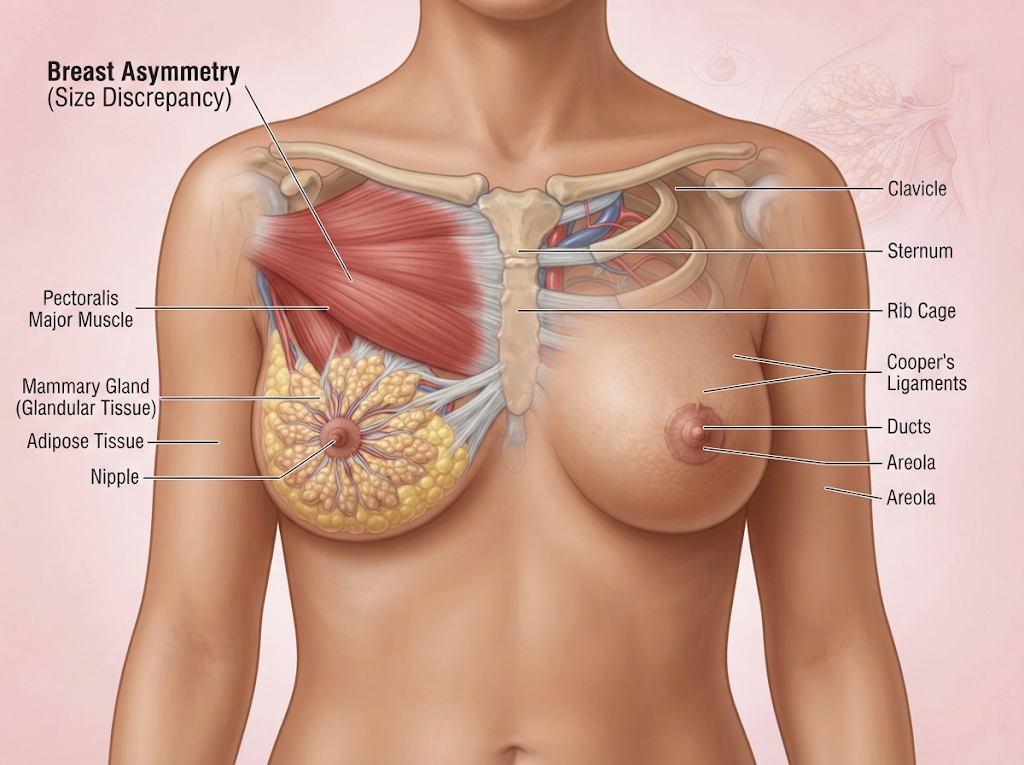
Breast asymmetry, meaning a difference in size, shape, or position between the two breasts, is present in the majority of women to some degree. It is usually completely normal and is rarely a sign of illness. A difference of up to a full cup size is common and typically requires no investigation. What does warrant medical attention is a new asymmetry that develops in adulthood, particularly if accompanied by a lump, skin change, or nipple change.
How Common Is Breast Asymmetry?
Research consistently finds that more than half of all women have measurable asymmetry between their breasts, and some studies put the figure considerably higher when small differences are included. The left breast is slightly larger than the right in most cases, though the reason for this directional tendency is not fully understood.
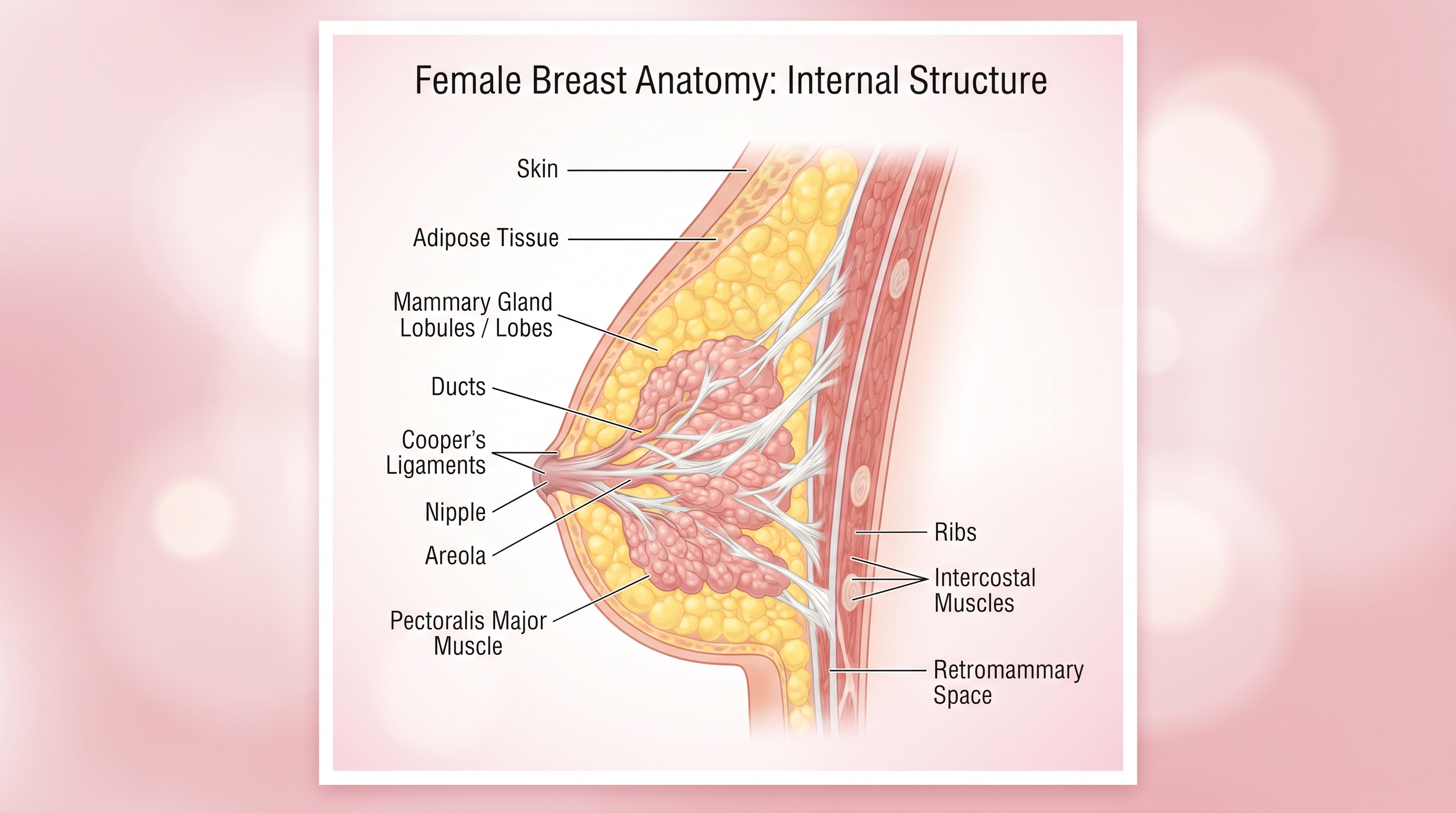
Asymmetry can involve size, shape, or both. One breast may sit higher on the chest wall. The nipples may point in slightly different directions. The areolae may differ in size. The degree of firmness or fullness may vary from side to side. All of these variations fall within the broad range of normal female anatomy.
The breasts develop during puberty from separate breast buds, and they do not always grow at exactly the same rate or to exactly the same size. In many women, a difference present since adolescence simply persists into adulthood. In others, changes related to pregnancy, breastfeeding, or weight fluctuation create or increase asymmetry over time.
What Causes Breast Asymmetry?
Several factors contribute to differences between the two breasts.
Developmental variation is the most common cause. Just as most people have one foot slightly larger than the other, the two breasts develop independently and rarely end up identical.
Hormonal sensitivity can cause one breast to respond more strongly than the other to hormonal fluctuation, resulting in one side feeling fuller or more tender at certain points in the menstrual cycle. This kind of functional asymmetry can fluctuate month to month.
Pregnancy and breastfeeding frequently alter the balance between breasts, particularly if feeding was predominantly from one side or if one breast produced more milk than the other. Post-breastfeeding involution may affect the two sides differently, leaving one breast smaller or sitting differently on the chest wall.
Weight change affects the fatty component of breast tissue and may change the relative volume of each breast, depending on how fat is distributed across the body.
Chest wall differences including slight differences in the angle of the ribs or pectoral muscles can affect how each breast appears, even when the breast tissue itself is similar in volume.
Previous surgery or injury, including biopsies, cyst aspirations, or trauma, can alter the texture or shape of one breast.
None of these are causes for alarm. They are the normal history of a body moving through time.
When to Seek Medical Review
The key distinction is between asymmetry that has always been present, or that has developed gradually alongside a recognised change such as pregnancy or weight gain, and asymmetry that appears or changes noticeably in adulthood with no obvious explanation.
Contact a healthcare provider if you notice:
A new difference in size or shape between your breasts that has developed over weeks or months without an obvious cause
A lump, thickening, or area of firmness on one side that is not mirrored on the other
Skin changes on one breast, including dimpling, redness, or puckering
A nipple that has recently inverted, changed shape, or begun to discharge spontaneously
Persistent pain localised to one area of one breast
In the absence of any of these features, asymmetry that has been stable for years is almost always benign and does not require investigation beyond routine breast screening appropriate to your age and country.
Body Image, Self-Acceptance, and the Weight of Unrealistic Standards
It is worth naming something that sits alongside the clinical information: the significant impact that breast asymmetry can have on how a woman feels about her body, particularly in a culture that presents idealised, often surgically altered images of women’s bodies as the standard.
Many women reach adulthood without ever seeing an unretouched image of breasts that look like theirs. When asymmetry is never shown and never discussed, the natural conclusion is that it is exceptional. It is not.
If asymmetry is causing significant distress, that experience is valid and worth addressing. Talking to a doctor about what you are noticing is a reasonable starting point, both to rule out any physical cause and to access support if the impact on your body image is substantial. In some healthcare systems, referral to a breast surgeon for assessment of significant asymmetry, including discussion of surgical options if appropriate, is available. The decision to pursue any cosmetic intervention is entirely personal and should never be made under external pressure or from a position of incomplete information.
More often, what helps most is simply knowing the truth: that what you are seeing in the mirror is not unusual, not a flaw, and not something most other women have escaped.
FAQ
Is it normal for one breast to be a full cup size larger than the other?
Yes. A difference of one cup size or less between breasts is within the range seen in healthy women and is rarely clinically significant. Larger differences are less common but also occur without underlying pathology. If the size difference has been stable over time and is not accompanied by any skin changes, lumps, or nipple changes, it is very unlikely to indicate a health problem and does not require investigation.
Does breast asymmetry get worse with age?
Asymmetry can change across a lifetime rather than necessarily worsen. Pregnancy, breastfeeding, weight changes, and the hormonal shifts of perimenopause and menopause can all affect the two breasts differently, altering the degree or character of existing asymmetry. Post-menopausal fatty involution sometimes makes differences in shape more noticeable as skin elasticity changes. These are normal age-related changes rather than signs of a worsening condition.
Can asymmetry be a sign of breast cancer?
Breast cancer can occasionally present as a change in the size or shape of one breast, which is why a new asymmetry, particularly if unexplained and accompanied by other changes such as a lump, skin dimpling, or nipple change, warrants medical review. However, the vast majority of long-standing asymmetry is entirely benign. The important word is new: a change in what was previously stable is what deserves attention, not asymmetry that has been present for years.
Is there anything that reduces breast asymmetry without surgery?
Well-fitted bras, including those designed with adjustable padding or removable inserts, can visually balance differences in size for day-to-day wear. There is no dietary, hormonal, or exercise-based intervention with reliable evidence for reducing structural asymmetry. Significant changes in body weight affect both breasts but do not reliably reduce the difference between them. For women distressed by marked asymmetry, a referral to a breast surgeon for an honest conversation about options is a reasonable step.
You Deserve to Feel at Home in Your Body. Mayno Can Help.
Understanding your body is the foundation of confidence in it. Mayno is built for women who want real information, not reassurance that glosses over the questions that actually matter. Whether you are navigating breast changes, perimenopausal shifts, or simply trying to understand what is normal for you, we are here.
Discover personalised women’s health support at mayno.health.
Disclaimer: This article is for informational purposes only and does not constitute medical advice. Always consult a qualified healthcare professional.