How Breasts Change Throughout Your Life
Most women are never given a map of what their breasts will do over a lifetime. Puberty arrives with little warning. Pregnancy reshapes things in ways nobody quite prepared you for. Then perimenopause brings another round of changes that feel unfamiliar all over again, and there is often no one to tell you whether what you are experiencing is expected or worth investigating. That gap in knowledge is not your fault. It is a gap in how women’s health has historically been talked about, and it leaves many women feeling unsettled by their own bodies at every stage. This article is your map.
Breast tissue changes continuously throughout a woman’s life, driven primarily by shifting hormone levels. From the glandular, dense tissue of adolescence to the softer, fattier composition of postmenopause, these changes are normal and expected. Pregnancy, breastfeeding, weight fluctuations, and the hormonal swings of perimenopause all leave their mark. Knowing what to expect at each stage makes it easier to recognise what is normal for you and notice when something genuinely warrants attention.
Puberty: The Beginning of Breast Development
Breast development is usually the first visible sign of puberty, typically beginning between the ages of 8 and 13, though the range is wide and all of it is normal. The process starts with the development of breast buds, small raised areas beneath the nipple that can feel tender and firm. One side often develops before the other, which can be alarming but is entirely typical.
Over the following two to four years, fatty tissue fills in around the developing glandular tissue, the nipple and areola enlarge, and the breast takes on its adult shape. By the mid-to-late teens, most breast development is complete, though breasts can continue to change with body composition into the early twenties.
During these years, breasts may feel tender, uneven, and lumpy. The tissue is predominantly glandular at this stage, which gives it a firmer, more textured quality. This is completely normal.
The Reproductive Years: Monthly Changes and a Shifting Baseline
Once ovulation is established, the menstrual cycle begins its monthly influence on breast tissue. In the first half of the cycle, rising oestrogen stimulates glandular tissue growth. In the second half, progesterone causes further expansion of the ducts and lobules, which is why breasts often feel fuller, heavier, and more sensitive in the week or two before a period. After the period begins, hormone levels drop, the swelling resolves, and breasts return to their baseline texture.
This cyclical fluctuation continues throughout the reproductive years and is entirely normal. However, it does mean that the timing of a breast self-check matters. The week following your period, when hormonal influence is at its lowest, gives you the most consistent and reliable picture of your baseline tissue.
The composition of breast tissue during the reproductive years is typically denser than it will be later in life. Dense tissue is rich in glandular and fibrous components relative to fat. On a mammogram, it appears white, which is also what tumours look like, making screening more complex in younger women with very dense tissue. Density is assessed radiologically, not by how a breast feels, and many women are unaware of their density classification.
Pregnancy and Breastfeeding: The Most Dramatic Changes
Pregnancy triggers some of the most significant and rapid breast changes a woman will ever experience. From early in the first trimester, rising oestrogen and progesterone stimulate a dramatic increase in glandular tissue and blood flow. Breasts often enlarge by one to two cup sizes, become notably tender, and the nipples darken and become more prominent as the areola widens.
By the second trimester, the breasts are preparing for milk production. The glandular tissue expands further and colostrum, the first milk, may begin to leak. After birth, a surge in prolactin triggers full milk production, and the breasts become firm and engorged as feeding is established.
Once breastfeeding ends, or if a woman does not breastfeed, the glandular tissue gradually involutes, meaning it shrinks back down. Many women find that their breasts are smaller after this involution than they were before pregnancy, and the skin may have less elasticity. Some women notice lumpiness or unevenness during this resolution period, which typically settles over several months.
Stretch marks, changes in nipple sensitivity, and shifts in overall shape are all common long-term effects of pregnancy and feeding. None of these are signs of illness. They are the marks of a body that has done something extraordinary.
Weight Changes: Fat Redistribution and Its Effects
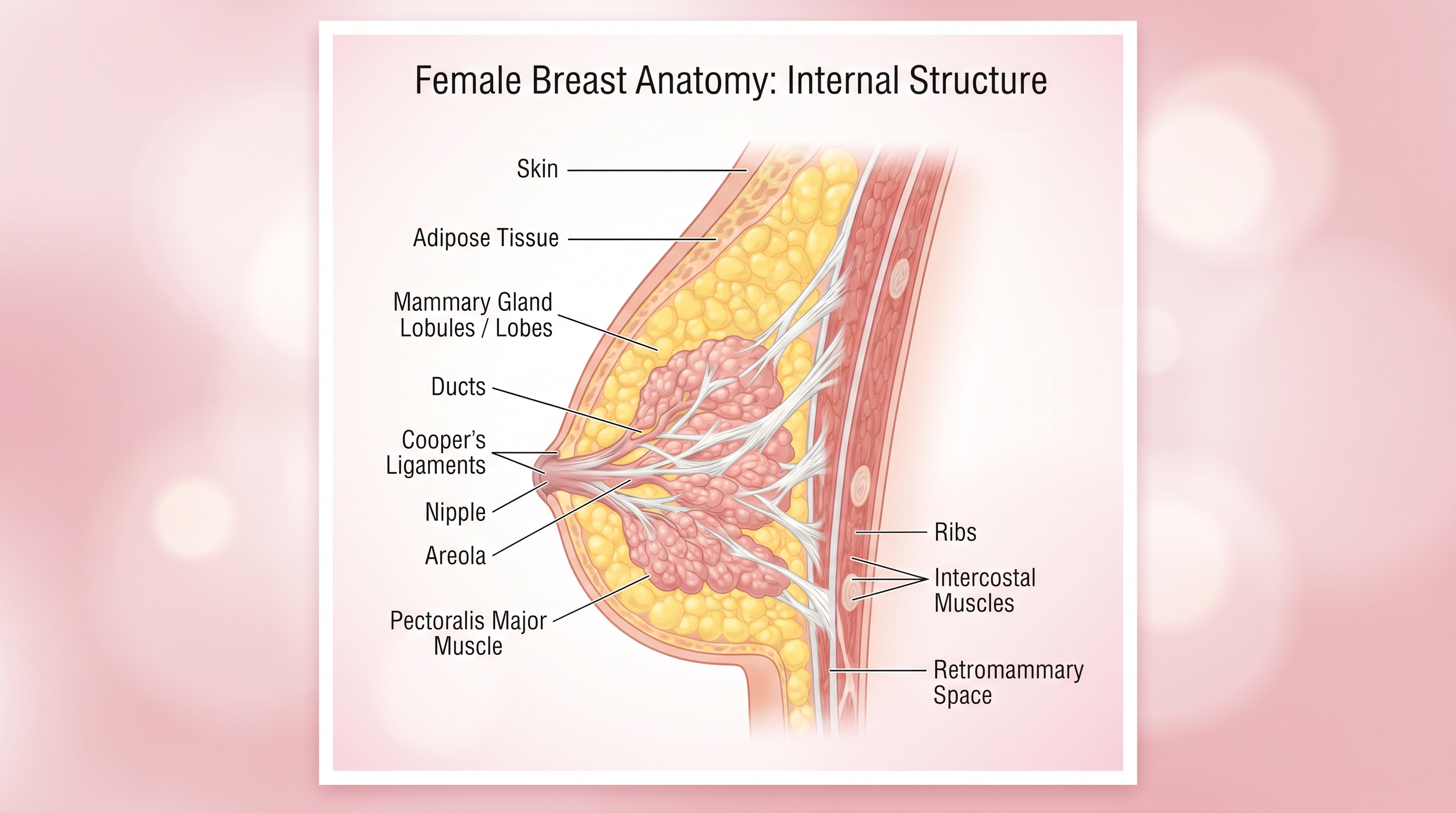
Because a significant portion of adult breast tissue is fatty, weight gain and weight loss have a direct effect on breast size and shape. The glandular component remains relatively stable through weight change, but the fatty envelope around it expands and contracts, altering the overall volume and sometimes the position of the breast on the chest wall.
This is why breast size does not map neatly onto glandular tissue or density. A woman with large breasts may have predominantly fatty tissue and relatively low density on imaging, while a smaller-breasted woman may have dense, glandular tissue. Neither tells you about cancer risk by itself.
Your 40s: Perimenopause Begins to Shift the Picture
The perimenopausal transition, which can begin anywhere from the early 40s to the mid-50s, brings a new round of breast changes. As ovarian function becomes less predictable, oestrogen levels fluctuate erratically rather than following the familiar monthly pattern. This can make breast symptoms more pronounced and less predictable. Some women find their breasts are tender for longer stretches, while others notice them becoming less dense and softer.
Cyclical symptoms may persist or even intensify in early perimenopause before settling as oestrogen levels eventually decline. Irregular periods mean breast tissue may stay in a stimulated state for longer than usual between cycles.
This is also the decade when mammographic screening begins in many countries, and when breast changes carry more clinical weight simply because overall breast cancer risk rises with age. Any new lump, skin change, nipple change, or persistent asymmetry in this decade warrants prompt medical review.
Your 50s and Beyond: Postmenopause and the Softer Breast
After the final menstrual period, oestrogen production from the ovaries drops significantly. Glandular tissue gradually gives way to fat in a process called fatty involution. Breasts typically become softer, less firm, and less dense over the postmenopausal years. Cyclical tenderness usually resolves.
For many women, this brings a welcome reduction in premenstrual breast discomfort. For others, the shift in texture can feel unfamiliar. The skin over the breast may become thinner and less elastic, and the position of the breast on the chest wall may change.
Women taking hormone replacement therapy (HRT) may find that their breast tissue retains more density and that some cyclical tenderness persists, depending on the type and dose of hormones used. This is expected and does not indicate a problem, though it is worth discussing with your prescribing clinician in the context of mammographic screening.
Postmenopause is also when any new breast change should be assessed promptly. Bleeding from the nipple, a new lump, skin puckering, or any asymmetry that was not previously present are all reasons to contact a doctor. Post-menopausal breast tissue is quieter hormonally, which means a new finding is less likely to be cyclical and more likely to warrant investigation.
FAQ
Do breasts always get bigger with age?
Not necessarily. Breast size depends on the balance of glandular and fatty tissue, hormone levels, and body weight. Breasts may grow during perimenopause due to hormonal fluctuation and weight changes, then soften and shift shape after menopause as glandular tissue involutes. Weight gain at any age increases breast size due to added fatty tissue, while significant weight loss has the reverse effect. Glandular volume itself peaks in the reproductive years.
Is it normal for one breast to be larger than the other?
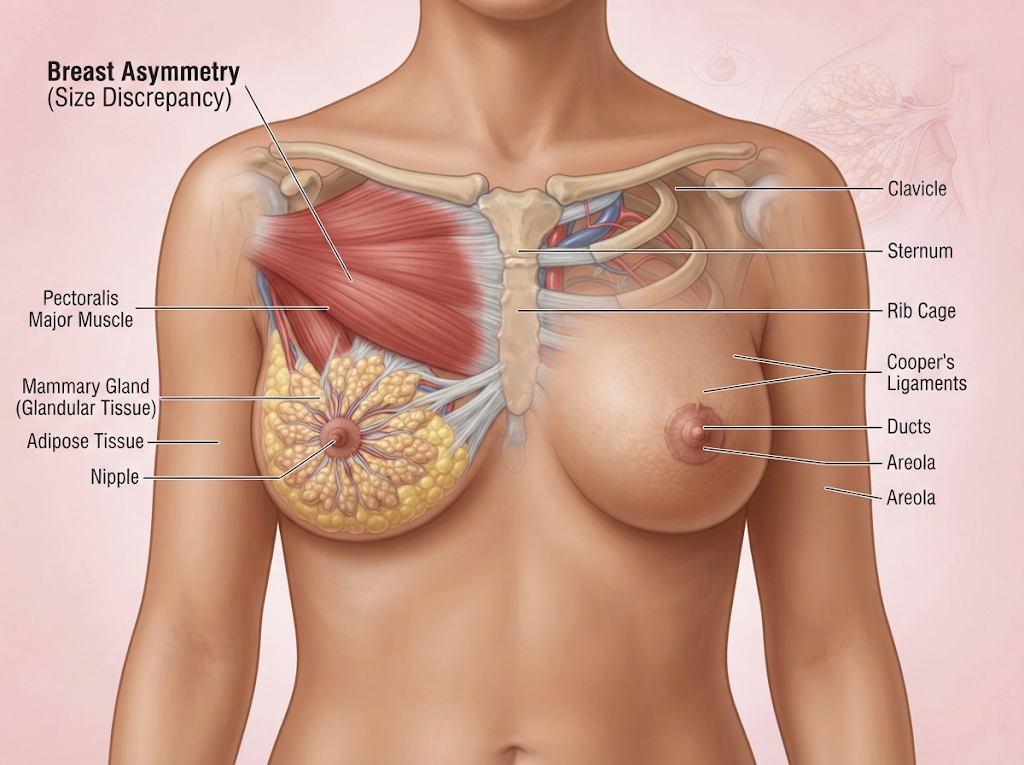
Yes. Breast asymmetry is very common and is usually present from the time of development. A difference of up to a full cup size between sides is within the range seen in healthy women. What is worth investigating is a new change in asymmetry, particularly if one breast has recently become larger, changed shape, or developed a new texture that the other has not.
Can HRT make breast changes worse in menopause?
HRT maintains higher levels of oestrogen and progesterone in the body, which means breast tissue may retain density and some women experience breast tenderness, particularly in the first few months of use. This usually settles. The clinical significance of HRT and breast density relates mainly to mammographic screening, since denser tissue can make interpretation more complex. This is something to discuss with the clinician managing your HRT.
What breast changes after breastfeeding are permanent?
Changes in skin elasticity, alterations in size relative to pre-pregnancy, shifts in nipple sensitivity, and changes in shape are all common after breastfeeding and may be long-lasting. The degree varies widely between women and is influenced by factors including the number of pregnancies, how long breastfeeding continued, genetics, and age. These changes are entirely normal and do not affect breast health or cancer risk.
Know Your Body at Every Stage. Mayno Is With You.
Understanding how your breasts change across your lifetime is one of the most practical things you can do for your health. It turns self-examination from a source of anxiety into a genuine tool. Mayno is here to give you the knowledge and support to feel confident in your body at every age.
Visit mayno.health to explore personalised health guidance built for women.
Disclaimer: This article is for informational purposes only and does not constitute medical advice. Always consult a qualified healthcare professional.