Cycle Tracking: Methods and What They Can Tell You
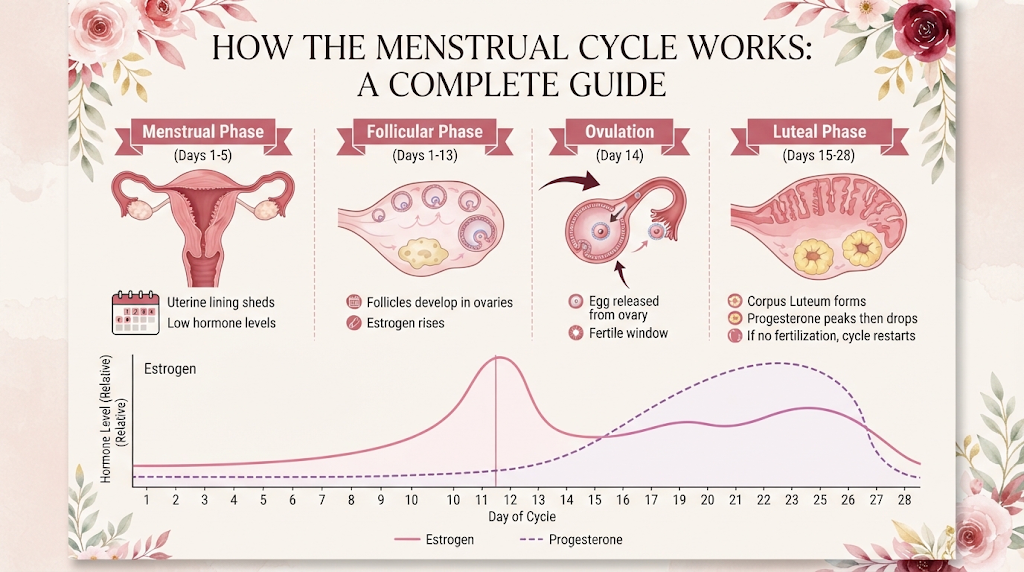
More women than ever are paying close attention to their menstrual cycles, not just to know when their period is coming, but to understand what the entire cycle is telling them about their health. This shift is meaningful. A cycle is not just a monthly inconvenience or a fertility signal. It reflects hormonal health, thyroid function, stress load, sleep quality, and nutritional status. The growing interest in cycle tracking is really a growing interest in knowing your own body more deeply, and that deserves to be taken seriously and supported properly.
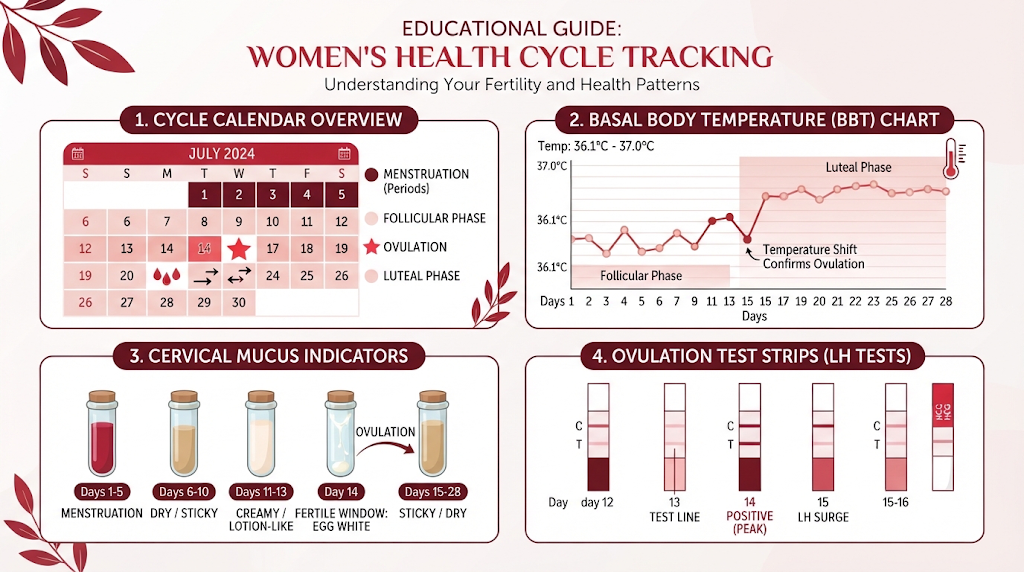
Cycle tracking ranges from basic period logging in an app to active observation methods such as basal body temperature (BBT) measurement, cervical mucus monitoring, and luteinising hormone (LH) strip testing. Each method gives different information. Basic logging tells you cycle length and period dates. Active tracking methods reveal whether and when ovulation is occurring, how the hormonal phases are progressing, and whether patterns over time point to anything worth discussing with a healthcare provider. The more data points you collect consistently, the more useful the picture becomes.
Period Apps Versus Active Tracking
Most cycle tracking starts with a period app. You log the first day of your period, record when it ends, and the app estimates when your next one will arrive and when you are likely to be fertile. This is a useful starting point. It gives you a record of cycle length over time and makes patterns visible that might otherwise go unnoticed.
But period apps that use only start and end dates are essentially working backwards from averages. They assume a 28-day cycle and predict ovulation on Day 14 based on that assumption, regardless of what is actually happening in your body. For women with irregular cycles, cycles that vary month to month, or hormonal conditions such as polycystic ovary syndrome (PCOS), these predictions can be significantly inaccurate.
Active tracking methods go a step further. Rather than inferring what the body is doing from dates, they measure physiological changes that directly reflect the hormonal events of the cycle. The three main active methods are basal body temperature, cervical mucus observation, and LH strip testing.
Basal Body Temperature
Basal body temperature (BBT) is your body’s resting temperature, measured first thing in the morning before getting up, speaking, or drinking anything. Progesterone, which rises after ovulation, causes a slight but measurable increase in this resting temperature, typically between 0.2 and 0.5 degrees Celsius.
By taking your temperature at the same time every morning and recording it, you can identify the shift that confirms ovulation has occurred. Before ovulation, temperatures tend to be lower. After ovulation, they rise and remain elevated until the period arrives (or throughout pregnancy if conception has occurred).
BBT tracking confirms that ovulation happened, but it cannot predict it in advance, since the temperature rise comes after the egg is already released. It is most useful when combined with other methods and reviewed over several cycles to identify your personal pattern. You need a thermometer that reads to two decimal places. Illness, alcohol, disrupted sleep, or taking your temperature at a different time than usual can all affect the reading, so noting these variables alongside your data keeps the record accurate.
Cervical Mucus
The cervical mucus method involves observing and recording the discharge produced by the cervix throughout the cycle. Cervical mucus changes in response to oestrogen and progesterone, and these changes are consistent enough to give information about where you are in the cycle.
In the days immediately after a period, discharge is often minimal or absent. As oestrogen rises in the follicular phase, mucus increases and progresses through a series of textures: sticky, then creamy, then increasingly wet and clear. In the days around ovulation, many women notice mucus that is clear, slippery, and stretchy, often compared to raw egg white. This is the fertile-type mucus that supports sperm survival and movement.
After ovulation, progesterone causes mucus to become thicker, drier, and less abundant again. The return of dry or thick mucus signals the post-ovulatory phase.
Observing this pattern daily and recording it alongside temperature data gives a fuller picture of the cycle than either method alone.
LH Strips
Luteinising hormone (LH) surges in the 24 to 36 hours before ovulation, triggering the release of the egg. LH test strips, which work similarly to pregnancy tests, detect this surge in urine. A positive result indicates that ovulation is likely to follow within one to two days.
LH strips are useful for identifying the approach of ovulation rather than confirming it after the fact, making them particularly relevant for those timing intercourse to conceive. They are available without prescription in most countries and are straightforward to use.
One limitation: some women, particularly those with PCOS, may experience multiple LH surges in a cycle without ovulation occurring, so a positive strip does not guarantee ovulation. Combining LH testing with BBT tracking over time helps identify whether a temperature rise consistently follows the LH surge.
What Tracking Reveals: The Cycle as a Fifth Vital Sign
The term “fifth vital sign” for the menstrual cycle was introduced to describe what clinicians and researchers increasingly recognise: that cycle patterns reflect systemic health in a way that makes them medically relevant beyond reproductive contexts.
A cycle that is consistently regular, with ovulation occurring and a luteal phase of adequate length, is generally a sign that the hormonal system is functioning well. Disruptions to that pattern can reflect disruptions elsewhere.
What tracking may reveal over time:
Irregular or absent ovulation can be associated with PCOS, thyroid dysfunction, hypothalamic disruption from stress, low body weight, or overtraining.
A short luteal phase (fewer than 10 days between ovulation and the next period) may be associated with low progesterone and can be relevant for those trying to conceive.
Cycle length changes over time can reflect perimenopause, particularly cycles that become progressively shorter or more variable.
Consistently heavy or painful periods noted over several cycles provide useful documented information for a healthcare provider.
Persistent spotting mid-cycle may warrant investigation.
Sharing Tracking Data With a Doctor
Three to six months of consistent tracking data gives a healthcare provider much more to work with than a verbal description of symptoms. When you attend an appointment about period-related symptoms, hormonal concerns, fertility questions, or perimenopausal changes, bringing a record of cycle lengths, ovulation timing, symptoms by cycle phase, and any patterns you have noticed makes the consultation more efficient and more productive.
Many apps allow you to export data as a PDF or screenshot summary. Some healthcare providers are familiar with specific fertility awareness apps and may ask which one you use. Even a simple handwritten record is more useful than approximate recall.
If you notice a pattern that feels consistently different from what you have experienced before, such as cycles becoming shorter, periods becoming significantly heavier, new mid-cycle spotting, or the loss of previously regular cycles, that is worth raising with a healthcare provider rather than waiting to see if it resolves.
FAQ
Is cycle tracking reliable for contraception?
Fertility awareness-based methods (FABMs), when taught properly and used consistently, have effectiveness rates comparable to barrier methods in typical use. However, they require rigorous daily practice and a good understanding of the method. Apps that simply predict fertile windows from period dates are not equivalent. Anyone using cycle tracking for contraception should learn a recognised FABM from a qualified instructor, and discuss the approach with a healthcare provider to ensure it suits their circumstances.
How long does it take before tracking becomes useful?
Most people begin to see useful patterns after three to six cycles of consistent tracking. The first month or two establish a baseline and highlight where your own cycle sits relative to the averages. By month four or five, you will usually have enough data to identify whether your cycle length is consistent, approximately when you tend to ovulate, and what your typical pre-period symptoms are and when they arrive. Consistency matters more than perfection.
Can tracking help identify PCOS or endometriosis?
Tracking can surface patterns that are consistent with these conditions, such as cycles longer than 35 days or irregular ovulation in PCOS, or very painful periods and spotting in endometriosis. It cannot diagnose either condition. A diagnosis of PCOS requires clinical assessment including blood hormone levels and often an ultrasound. Endometriosis can only be definitively diagnosed through laparoscopy. But documented cycle data can support and speed up the diagnostic conversation significantly.
Does stress actually affect the cycle?
Yes. Psychological and physical stress signals travel through the hypothalamic-pituitary-ovarian axis, which is the hormonal pathway that governs the menstrual cycle. Under significant stress, the hypothalamus can reduce or delay the release of the hormones that trigger ovulation. This can result in longer cycles, delayed ovulation, or anovulatory cycles where no egg is released at all. Chronic stress, illness, poor sleep, and significant weight changes are all recognised cycle disruptors, and they show up in tracking data as variability or pattern breaks.
Your Cycle Has a Lot to Say. Mayno Helps You Listen.
Cycle tracking is one of the most accessible ways to engage with your own health data, and the information it provides is genuinely valuable. Whether you are tracking for fertility, for general health awareness, or to have better conversations with your healthcare provider, Mayno is here with the knowledge to help you make sense of what you are seeing.
Visit mayno.health for clear, trustworthy women’s health information.
This article is for informational purposes only and does not constitute medical advice. If you have concerns about your menstrual cycle or reproductive health, please consult a qualified healthcare professional. Mayno Health does not replace clinical care.
Disclaimer: This article is for informational purposes only and does not constitute medical advice. Always consult a qualified healthcare professional.