What is perimenopause? A clear, honest guide for women in their 40s
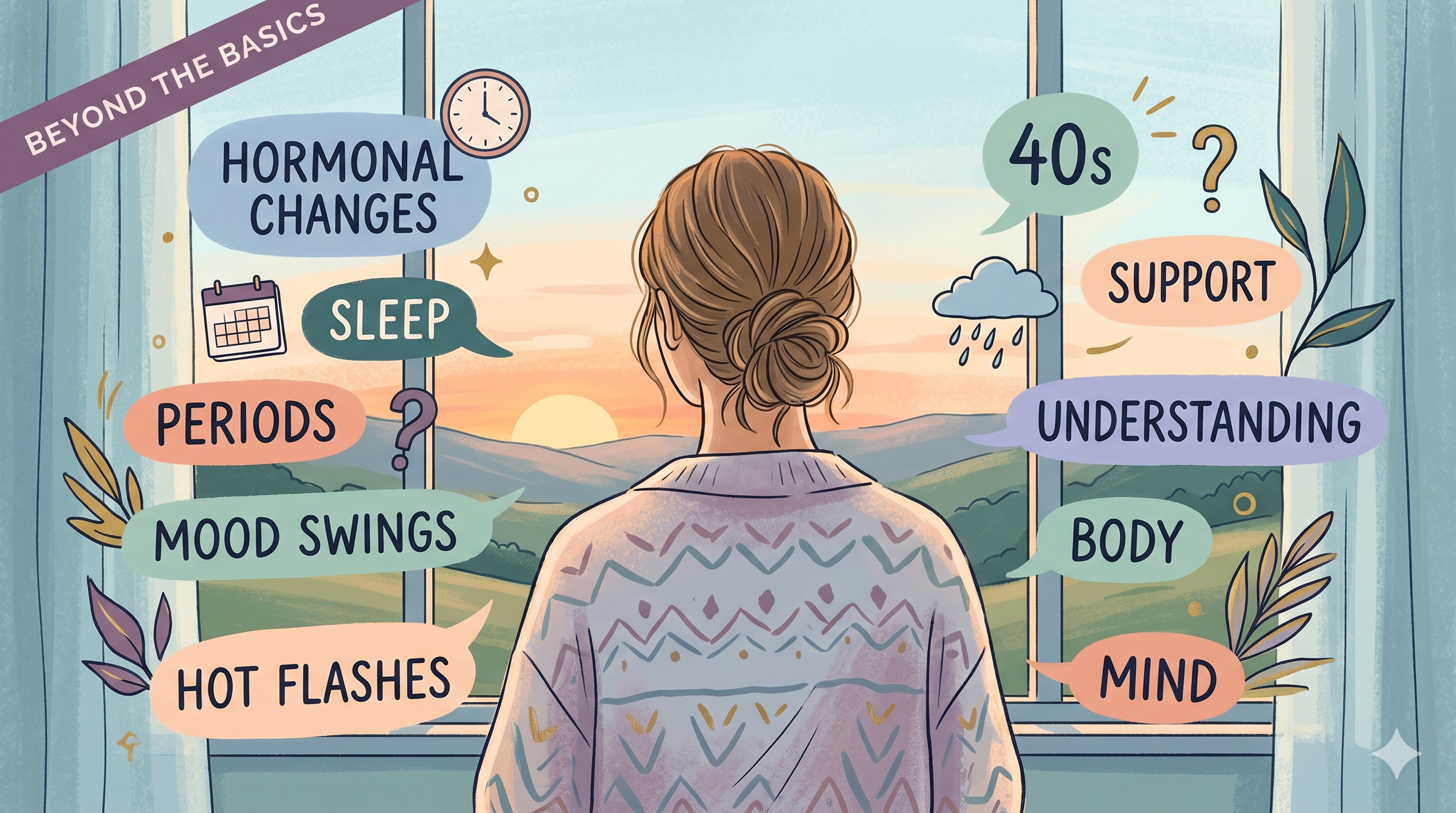
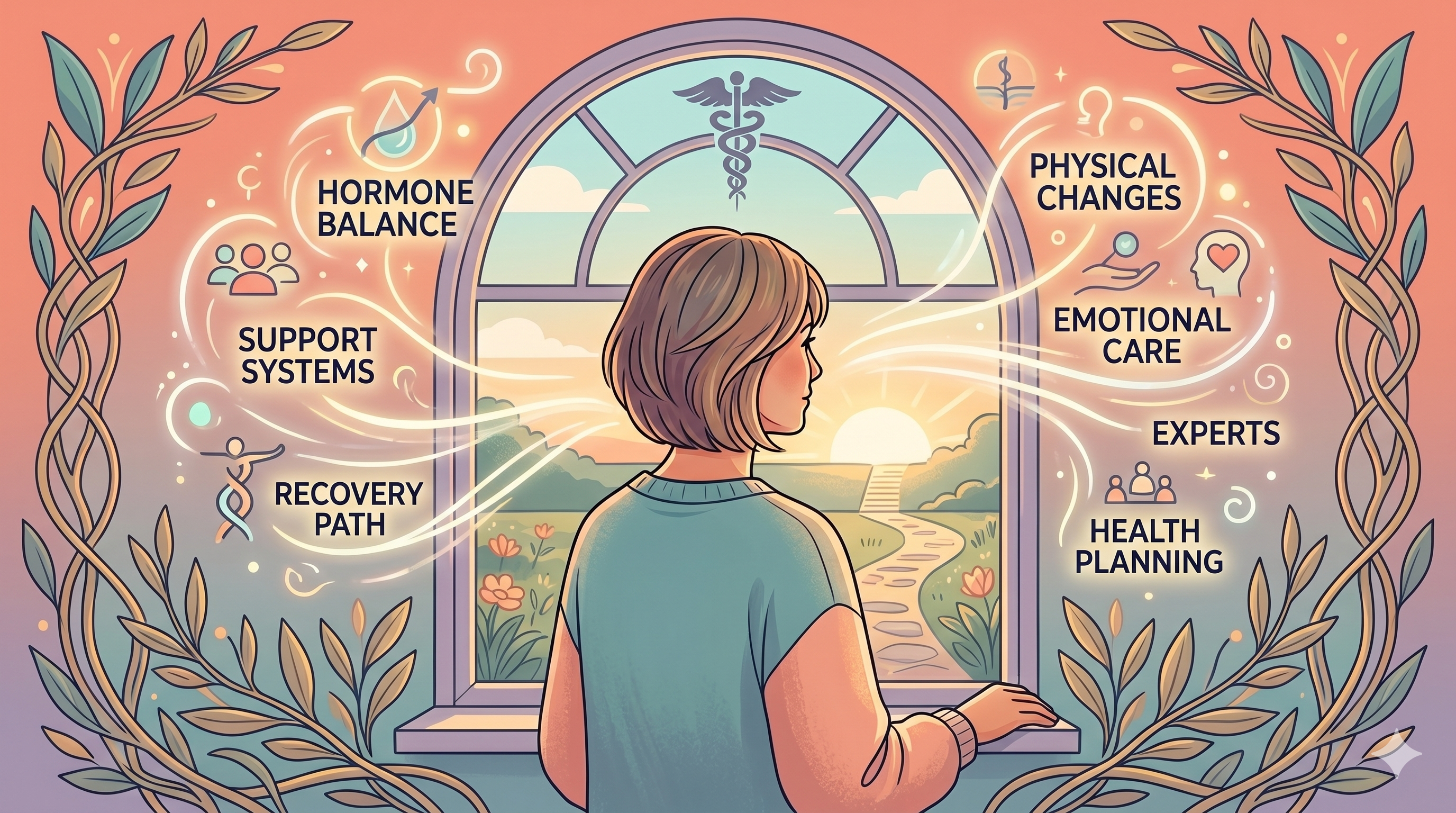
Something is off. You can feel it in the way you sleep, in the way your body runs warmer than it used to, in the brain that sometimes stalls mid-thought. Your periods may have started arriving on their own, unpredictable schedule. Your moods can shift in ways that feel disproportionate and bewildering. And yet when you search for answers, the information is either too clinical to be useful or so vague it tells you nothing. If this sounds familiar, you are not imagining it, and you are not alone. What you may be experiencing is perimenopause, and it deserves a clear, honest explanation.
Perimenopause is the transitional phase that leads up to menopause. It begins when your ovaries gradually start producing less oestrogen, typically in your early-to-mid 40s, though it can start earlier, and ends when you have gone 12 consecutive months without a period. It is not a single event but a process, and it can last anywhere from a few years to over a decade.
What is perimenopause, exactly?
The word perimenopause comes from the Greek prefix peri, meaning "around" or "near". It describes the years surrounding the final menstrual period, the transition your body makes between your reproductive years and menopause itself.
This is not a disease, and it is not a disorder. It is a natural biological shift, one that every woman with a functioning reproductive system will experience. But natural does not mean easy, and it certainly does not mean invisible. The hormonal changes that happen during perimenopause are significant, and they affect almost every system in your body.
What makes perimenopause particularly disorienting is that it does not announce itself clearly. You can be in the thick of it while still having regular periods. You can experience symptoms for years before anyone, including your own doctor, connects them to shifting hormones.
When does perimenopause start, and how long does it last?
Most women begin perimenopause in their early-to-mid 40s, though it is not unusual for it to start in the late 30s. There is no universal start date because it is not triggered by a birthday; it is triggered by biology, and every woman's biology moves at its own pace.
The average duration of perimenopause is four to eight years. Some women move through it in two or three years; others spend a decade in the transition. Both are within the normal range. The intensity and duration of symptoms can also vary enormously; some women experience profound disruption, while others find the transition relatively smooth.
There is no reliable test to tell you exactly when perimenopause has started. The signs of perimenopause are your most useful guide, particularly changes in your menstrual cycle, as well as other physical or emotional shifts.
What is happening to your hormones during perimenopause?
To understand perimenopause, it helps to understand what oestrogen does. Throughout your reproductive years, oestrogen has been doing a remarkable amount of work: regulating your menstrual cycle, supporting bone density, influencing brain chemistry, maintaining vaginal and urinary tissue health, and affecting how your cardiovascular system functions. It is not an exaggeration to say it touches almost everything.
During perimenopause, your ovaries begin producing oestrogen in an increasingly erratic way. Levels do not simply decline steadily; they rise and fall unpredictably, sometimes dramatically, before eventually settling into permanent decline. This fluctuation is what drives many of the most common perimenopause symptoms: the hot flushes, the mood shifts, the disrupted sleep, and the brain fog that comes and goes without warning.
Alongside oestrogen, progesterone also begins to decline. Progesterone is produced after ovulation each cycle. As ovulation becomes less frequent and eventually stops, progesterone levels fall. Because progesterone has a naturally calming, sleep-supporting effect, its decline often explains the anxiety and insomnia many women experience in perimenopause long before they suspect hormones are involved.
Your testosterone levels also shift during this period, which can affect energy, motivation, and libido. These changes happen gradually and are often overlooked entirely in conversations about perimenopause symptoms.
What are the signs of perimenopause?
There are 34 officially recognised symptoms of the perimenopause and menopause transition. The most commonly reported include:
Irregular periods: cycles that become longer, shorter, heavier, lighter, or simply unpredictable. This is usually one of the first signs.
Hot flushes and night sweats: sudden waves of heat, often accompanied by a racing heart and sweating. Night sweats disturb sleep and can become a source of significant exhaustion.
Sleep disruption: whether from night sweats, difficulty falling asleep, or waking in the early hours with anxiety.
Mood changes: irritability, low mood, anxiety, or emotional sensitivity that feels out of proportion to circumstances.
Brain fog: difficulty concentrating, forgetting words mid-sentence, or struggling to hold a train of thought.
Joint pain, headaches, breast tenderness, digestive changes, and changes in skin and hair are also recognised perimenopause symptoms, though they receive less attention than hot flushes and period changes.
How is perimenopause different from menopause?
These two terms are often used interchangeably, but they mean different things, and that distinction matters when it comes to getting the right support.
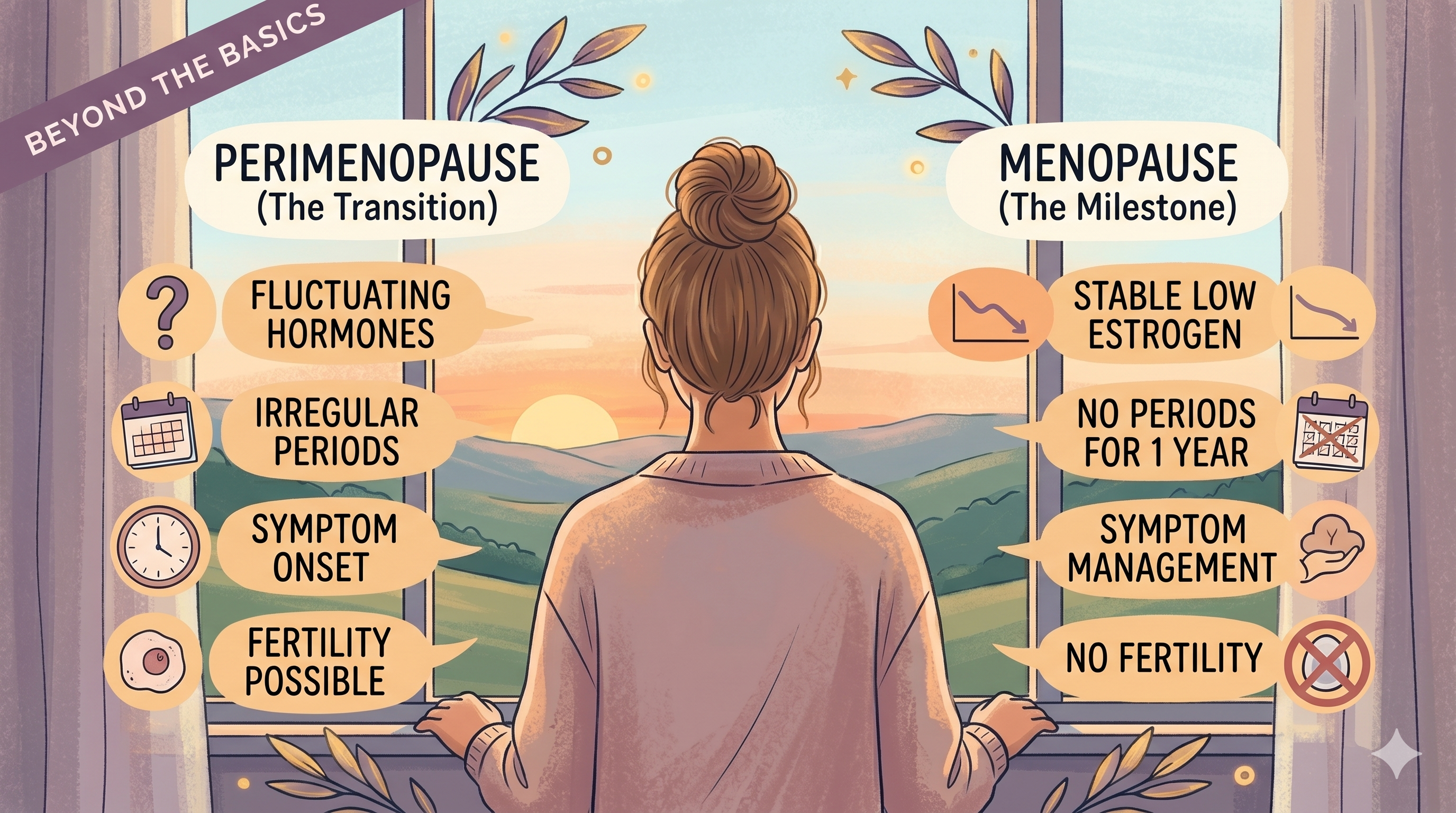
Perimenopause is the transition phase. Your hormones are fluctuating. You are still having periods, even if they are irregular. Symptoms can be intense and unpredictable precisely because your hormone levels are unstable rather than simply low.
Menopause is a single point in time, the moment you have gone 12 consecutive months without a menstrual period. It is a retrospective diagnosis: you only know you have reached menopause once a full year has passed. The average age of menopause is 51, although research has shown that it can start as early as 35.
Postmenopause describes the years that follow menopause. Many symptoms improve after menopause, though some, particularly vaginal dryness and urinary changes, can persist or worsen without treatment.
Understanding where you are in the transition helps you make sense of your experience and have a more productive conversation with your healthcare provider.
How do I know if it's perimenopause and not something else?
This is one of the most common and reasonable questions women have — and one of the reasons perimenopause is so frequently misdiagnosed. Its symptoms overlap with many other conditions: thyroid problems, depression, anxiety disorder, chronic fatigue, and iron deficiency anaemia can all produce a similar picture.
There is no single definitive blood test for perimenopause. Because oestrogen fluctuates so significantly during this phase, a single FSH (follicle-stimulating hormone) test can be misleading.
If you are under 45 and experiencing what you believe may be perimenopause symptoms, it is worth speaking to your GP and asking specifically about early perimenopause. Be prepared to describe your symptoms in detail and, if possible, bring a symptom diary covering the past few months.
Frequently asked questions
What is the difference between perimenopause and menopause?
Perimenopause is the transitional period leading up to menopause — a phase that can last several years during which your hormone levels fluctuate significantly and symptoms often arise. Menopause is defined as one specific moment: the point at which you have gone 12 consecutive months without a menstrual period. Everything before that point is perimenopause; everything after is postmenopause. Most of the symptoms women associate with "menopause" actually occur during perimenopause, when hormonal fluctuation is at its most intense.
At what age does perimenopause start?
Most women begin perimenopause between their early and mid 40s, but it is not unusual for it to start in the late 30s. A smaller number of women experience early or premature perimenopause before the age of 40, which can have additional health implications and warrants prompt medical attention. There is no universally "normal" age; genetics, lifestyle, and health history all play a role in timing.
How long does perimenopause last?
On average, perimenopause lasts between four and eight years, though this varies widely. Some women move through the transition in two to three years; others are in perimenopause for a decade or more. The length is shaped by genetics, when it starts, and individual hormonal patterns. It ends when you reach menopause, defined as 12 consecutive months without a period.
What are the first signs of perimenopause?
Changes in your menstrual cycle are often the earliest noticeable sign, such as periods that become irregular, heavier, lighter, or further apart than usual. Alongside this, many women notice sleep becoming more disrupted, a new sensitivity to anxiety or low mood, and subtle changes in energy levels. Some women experience new-onset migraines, breast tenderness, or joint aches before they make the connection to perimenopause. Because these symptoms are easy to attribute to stress or other causes, many women are in perimenopause for a year or more before they realise it.
Mayno is built to support you through every stage of the perimenopause and menopause journey, with personalised guidance, symptom tracking, and a community that gets it. You deserve clarity, not confusion. Come find yours.
Disclaimer: This article is for informational purposes only and does not constitute medical advice. Always consult a qualified healthcare professional.