The difference between perimenopause and menopause, and why it matters
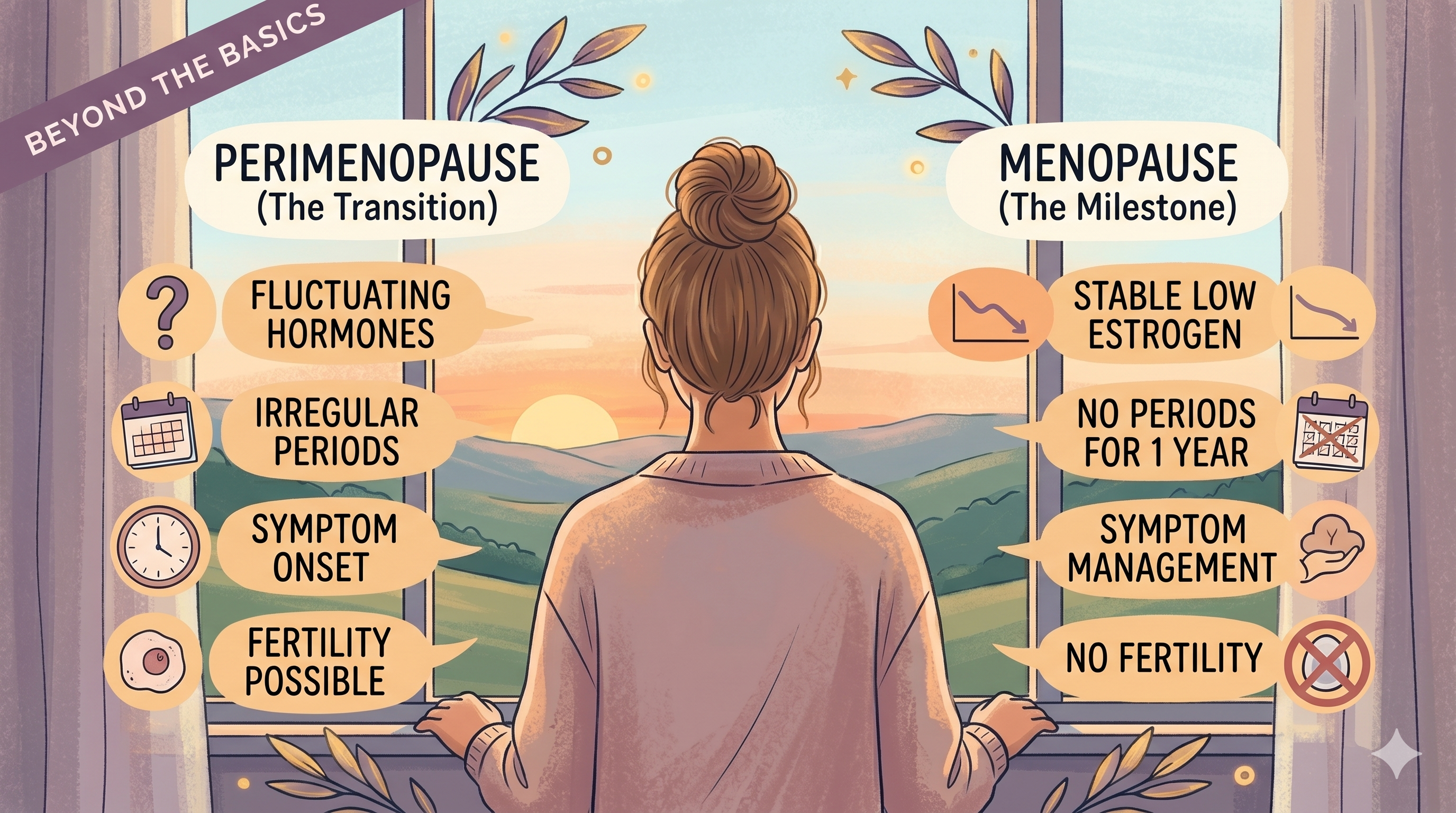
Perimenopause and menopause. You have probably heard both words used to describe the same thing, sometimes in the same sentence, sometimes by the same doctor. It is understandable. The two are closely related, and in everyday conversation, the distinction can feel academic. But clinically, and practically, they are not the same thing at all. They describe different hormonal states, symptom profiles, and time windows. And when the language gets muddled, something important gets lost: women end up without the specific, timely support they need. Getting the words right is not pedantry. It is the foundation of getting the right care.
Perimenopause is the transitional phase leading up to menopause, typically lasting several years, during which hormone levels fluctuate unpredictably, and symptoms are often at their most intense. Menopause is a single point in time, defined as 12 consecutive months without a menstrual period. Everything before that point is perimenopause; everything after is postmenopause.
What is perimenopause?
Perimenopause begins when the ovaries start producing oestrogen less reliably. This does not happen all at once. Hormone levels do not simply slope downward in a steady, predictable line. Instead, they fluctuate. Some months, oestrogen surges higher than normal; others, it drops sharply. This erratic pattern is precisely what makes perimenopause so difficult to navigate. Your body is not in a stable new state yet. It is in motion, and the instability is felt in almost every system.
This phase typically begins in a woman's early-to-mid 40s, though it can start in the late 30s. It lasts on average four to eight years, though some women experience a shorter transition and others a longer one. Throughout perimenopause, you still have periods, even if they become irregular, heavier, lighter, or unpredictable. The presence of any menstrual bleeding means you have not yet reached menopause.
Symptoms during perimenopause can be significant. Hot flushes, night sweats, disrupted sleep, mood changes, anxiety, brain fog, joint pain, irregular periods and changes in libido are all commonly reported. Because hormones are fluctuating rather than simply low, symptoms can feel inconsistent and confusing, coming and going in ways that do not follow any obvious pattern.
What is menopause?
Menopause is not a phase. It is a moment. Specifically, it is the point at which a woman has gone 12 consecutive months without a menstrual period, which marks the end of ovarian reproductive function. The average age of natural menopause is 51, though a range of 45 to 55 is considered typical.
Because menopause is defined retrospectively, you cannot know you have reached it until a full year has passed without a period. In practical terms, this means that what is often called "going through menopause" is usually perimenopause. The transition you live through, the years of symptoms and hormonal turbulence, that is perimenopause. The moment of menopause itself is a confirmation, not an experience.
Most women who say they are "in menopause" are, hormonally speaking, in perimenopause. The language matters because treatment decisions, particularly around hormonal therapy, can be different depending on which phase you are in.
What is postmenopause?
Postmenopause describes the years following menopause. Once you have passed the 12-month mark without a period, you are considered postmenopausal for the rest of your life. For many women, some symptoms, particularly hot flushes, improve in postmenopause as the body settles into a new hormonal baseline. Others, especially genitourinary symptoms such as vaginal dryness and urinary changes, can persist or worsen without treatment, because they are driven by consistently low oestrogen rather than fluctuating levels.
Understanding postmenopause matters because it is a distinct phase with its own health considerations, including bone density, cardiovascular health, and cognitive wellbeing. The care a postmenopausal woman needs may differ from what a perimenopausal woman needs, even when their surface symptoms look similar.
Why do the hormonal differences matter for how you feel?
The key hormonal difference between perimenopause and menopause is not just the level of oestrogen but its stability. During perimenopause, oestrogen fluctuates widely. These fluctuations are what drive the intensity of many symptoms. Hot flushes, for example, are closely associated with rapid drops in oestrogen. Mood instability often tracks with the unpredictable rises and falls. Brain fog can come and go because the brain is responding to a hormonal environment that keeps shifting.
After menopause, oestrogen is consistently low. Some symptoms improve because the body has adapted to a stable, if reduced, hormonal state. Others persist or emerge because the tissues and systems that depend on oestrogen, including bone, the vaginal walls, and the urinary tract, are responding to sustained low levels rather than volatile ones.
Progesterone also declines significantly during this transition. Because progesterone has natural calming and sleep-supporting properties, its reduction contributes to the anxiety and insomnia that many women first notice in perimenopause, often before they have any reason to suspect hormones are involved.
Why accurate language leads to better care
When a woman tells her GP she is "going through menopause", the doctor may interpret this differently depending on her age and the absence of further detail. If she is 44 with irregular periods and significant symptoms, she is almost certainly in perimenopause, and the clinical approach should reflect that. Hormone levels behave differently during perimenopause, blood tests can be misleading, and treatment decisions around HRT can vary based on whether you are still having periods.
Knowing the correct term also helps you ask better questions. Rather than seeking information about menopause symptoms broadly, you can look specifically at perimenopause symptoms in your 40s, or ask your GP about perimenopause symptom management rather than post-menopausal HRT. The more specific your language, the more relevant the information and care you receive.
There is also something important about simply being seen accurately. Many women spend years attributing their symptoms to stress, depression, or ageing before perimenopause enters the picture. Once the correct framework is in place, relief often follows: not because the symptoms disappear, but because they finally make sense.
Frequently asked questions
How do you know when you have reached menopause?
Menopause is confirmed when 12 consecutive months have passed without a menstrual period. There is no single moment at which you are told you have reached menopause. You look back, count 12 uninterrupted period-free months, and that point in time is retrospectively your menopause. Blood tests can support a diagnosis but are not always necessary or definitive, particularly for women over 45 with typical symptoms.
Can you still get pregnant in perimenopause?
Yes. As long as you are still ovulating, even occasionally and unpredictably, pregnancy is possible during perimenopause. Ovulation does not stop abruptly. It becomes less frequent and irregular, which means your fertile window also becomes unpredictable. If you do not want to become pregnant, contraception remains important throughout perimenopause.
What hormones change in perimenopause vs menopause?
In both phases, oestrogen and progesterone decline. The key difference is how. During perimenopause, oestrogen fluctuates erratically, spiking and dropping unpredictably before eventually falling. During and after menopause, oestrogen settles into a consistently lower state. Progesterone declines earlier in the transition as ovulation becomes less frequent. FSH (follicle-stimulating hormone) rises during the transition as the pituitary gland works harder to stimulate the ovaries. Testosterone also declines gradually across this period, affecting energy, mood, and libido.
Is perimenopause the same as menopause?
No, though the two are closely related and the terms are frequently confused. Perimenopause is the transitional phase that precedes menopause, during which hormones fluctuate and symptoms are often at their most intense. It can last several years. Menopause is a single point in time: 12 consecutive months without a period. The years of symptoms most women associate with menopause are, technically, perimenopause. Understanding the distinction helps you seek the right support at the right time.
Mayno is built to help you make sense of every stage of this transition, from the first subtle shifts of perimenopause right through to postmenopause. Track your symptoms, understand your patterns, and get support that actually speaks to where you are. You deserve care that is as specific as your experience.
Disclaimer: This article is for informational purposes only and does not constitute medical advice. Always consult a qualified healthcare professional.